Spring 2026 Investment Directions: Inflation, AI & Diversifiers

Key takeaways

  • Despite heightened geopolitical tensions and concerns about inflation and potential growth shocks, we believe the macro backdrop supports staying invested in equities.
  • We prefer U.S. equities, leaning into AI, growth, and large cap exposures, with value as an important diversifier. Earnings in the U.S. have been steadily revised higher, even as volatility spiked and prices slid.
  • Outside the U.S., we prefer emerging market equities over those in developed markets, given the centrality of many EM countries in the ongoing AI buildout.
  • In fixed income, we prioritize income and see opportunities in securitized assets over corporate credit, as well as emerging market hard currency debt, given the current regime of elevated energy prices and tighter global financial conditions.
  • We favor a diversified basket of diversifiers, such as alternative asset classes and liquid alternative strategies. Traditional diversifiers such as duration and gold sold off alongside equities in March, a reminder that ballast is not one-size-fits-all.

Featured funds

TOPT

iShares Top 20 U.S. Stocks ETF

Seek to track the performance of 20 largest U.S. stocks, by market capitalization.

DYNF

iShares U.S. Equity Factor Rotation Active ETF

Seek growth potential through active rotation across U.S. equity factors.

BINC

iShares Flexible Income Active ETF

Seek to maximize income with an active fixed income approach.

IALT

iShares Systematic Alternatives Active ETF

Seek total return across market cycles.

Introduction: What’s driving markets in Spring 2026?

2026 has already presented investors with a series of dramatic developments, including the largest oil supply disruption in history, concerns about artificial intelligence (AI) decimating certain software models (the “DiSaaSter”) and other ways AI could disrupt the economy ... or generally fail to live up to the hype.

While there are doubtless risks on the horizon, we also see opportunities. We retain a constructive outlook for risk assets, while building a diversified basket of diversifiers to gird portfolios against an expanding array of potential shocks.

This edition of our Investment Directions takes on a new look. As the weather heats up, our 2026 Spring Outlook embraces a slimmed down word count, Q&A format, and visual-first approach – better for consuming on the go, or preferably, outdoors.

We are in constant conversations with clients, and so here are the questions many of them are asking -- and our best efforts to answer them and provide a roadmap for investors to navigate an increasingly complex and fast-moving world.

1. How is the Middle East conflict affecting the U.S. economy?

The Middle East conflict has pushed oil prices higher, but the implications for the U.S. economy - and markets - are nuanced. As a net energy exporter, the U.S. is less exposed than many other nations. This has helped cushion the growth impact in America relative to more import-dependent economies. Higher energy prices will still weigh on consumers, particularly via gasoline, but we expect that drag to be partially offset by fiscal support, including tax refunds.

Consensus forecasts for U.S. GDP continue to average 2%, though we see some evidence of recent slowing.1 Perhaps more importantly, growth has become more reliant on a narrow set of drivers associated with AI and investment spending, which could make it more fragile. We think that backdrop supports staying invested in equities, despite headlines around inflation and growth shocks, while being more deliberate about diversification as volatility remains elevated.

Importantly, U.S. earnings have not been especially sensitive to oil unless disruptions persist. Historically, even large oil moves have tended to slow earnings growth rather than reverse it: since 1970, S&P 500 earnings have generally remained positive following oil increases of up to ~70% year-over-year, with negative outcomes concentrated in more extreme shocks - typically when oil spikes coincide with broader downturns.2

At the same time, energy infrastructure disruption may cause energy prices to remain higher than levels seen at the start of the year. Higher energy prices may reinforce longer-term themes around energy security and supply resilience, which could drive increased investment in defense and infrastructure even after the conflict fades. Policymakers are likely to prioritize rebuilding and expanding strategic energy reserves and reducing reliance on vulnerable supply routes - potentially putting a higher floor under oil prices from here.

Source: EIA; Gulf International Forum, Bloomberg as of April 14, 2026. Y axis showing % of a country’s Liquefied Natural Gas (LNG) imports that pass through the Strait of Hormuz. X axis showing % of a country’s crude oil imports that pass through the Strait of Hormuz. Post-February period is defined as Feb. 28, 2026 to April 14, 2026. YTD defined as returns from Dec. 31 to April 14. Size of bubbles represents the magnitude of post February performance on an absolute value basis. Performance based on the following indexes: United States: S&P 500 Total Return, Europe: MSCI EMU Net Return Index, China: MSCI China Net Return Index, Thailand: MSCI Thailand IMI 25-50 Net Return Index USD, Singapore, MSCI Singapore 25-50 Net Return Index USD, Taiwan: MSCI Taiwan 25-50 Net Return Index USD, India: MSCI India Net Return Index USD, South Korea: MSCI Korea 25-50 Net Return Index USD, Japan: MSCI Japan Net Return Index. Index performance is for illustrative purposes only. Index performance does not reflect any management fees or expenses. Indexes are unmanaged and one cannot invest directly in an index. Past performance does not guarantee future results.

Chart description: Bubble scatterplot chart with axes showing Oil and LNG imports via Hormuz and size of the bubble shows magnitude of post February performance, for the United States, Europe, China, Thailand, Singapore, Taiwan, India, South Korea, and Japan, categorized by Emerging or Developed markets.


Fund to consider

2. What’s the outlook for inflation and Fed Policy?

Inflation is moderating, but the path remains uneven. Headline inflation has moved higher given energy price shocks while core inflation remains sticky around the 2.6% level – above the Fed’s target.3

While near-term pressures remain elevated, reflecting supply-side dynamics and geopolitical uncertainty, they are not driving a broad-based reacceleration in market-based measures of inflation.

Under the surface, meanwhile,  there are some signs of inflation moderation: as recent CPI data show, near-term disinflation is being supported by the rollback of tariffs in certain goods categories and continued shelter deceleration.

For the Fed, this creates a mild stagflationary trade-off. Historically, similar shocks have led to an initial focus on inflation before growth concerns dominate. However, this shock alone is unlikely to warrant further tightening. Fed Chair Jerome Powell believes interest rate policy is already restrictive, with the fed funds rate estimated at 50–75 basis points (bps) above neutral and financial conditions tighter by ~80 bps.4

We believe this leaves the Fed on pause and data-dependent for now, but likely to shift toward gradual rate cuts later if inflation continues to move toward target or growth moderates. With headline inflation expected to stay elevated in the near term, and the next move from the Fed likely a cut, we believe investors may consider adding real rate protection to their portfolio via inflation-protected securities.

Figure 2: Inflation forecasts hold steady above Fed’s target

Line chart showing inflation forecasts July 20 through January 27

Source: Federal Reserve Bank of Philadelphia (Short-Term and Long-Term Inflation Forecasts: Survey of Professional Forecasters), April 10, 2026. The dashed line represents the median forecast, until Q1 2027. Forward looking estimates may not come to pass. Gap in data reflective of skipped Oct. 2025 CPI report.

Chart description: Line chart showing both core and headline CPI levels YoY on a percentage basis starting in July 2020, with forecasted projections shown as a dotted line.


Fund to consider

3. How is AI reshaping the labor market?

AI is rapidly advancing as agents undertake increasingly complex multi-step tasks, but data shows that it’s mostly too soon to know AI’s impact on employment. Job growth has averaged 25,000 over the past year, a sharp deceleration from the previous 12 months.5

Still, labor markets remain in a delicate equilibrium, with unemployment holding steady around 4.3%.6 Deeper disruptions are happening below the surface that will determine the health of the overall economy.

  • Job gains are highly concentrated in a small number of sectors. Over the past three years, payroll growth has come disproportionately from education and health care: about 2.7 million jobs in the last three years, which represents over 80% of jobs added during that period.
  • Sectors that employ a large share of white-collar and tech-adjacent workers have seen slower growth. Growth in professional and business services and information jobs, which may be especially vulnerable to AI disruption, have been weak, as shown in Figure 3.
  • We believe job numbers mask other changes: sector-specific displacement, declining job mobility, and an expanding mismatch between where workers are and where demand is heading. The equilibrium is fragile, and further macro shocks could tip it.
  • Immigration policy and demographic shifts are tightening labor supply. Census estimates show net international migration peaked at 2.7 million in 2024, fell to 1.3 million in 2025, and is projected to slow to roughly 321,000 in 2026.7 Together with aging-related declines in participation, the Fed argues this combination could push labor-force growth close to zero this year and drive breakeven payroll growth toward zero.8

The labor market is still creating jobs in aggregate, but not in the same places or for the same types of workers. Therefore, AI-related pressures can potentially coexist with a stable unemployment rate, even as labor-market conditions become more uneven across industries, skills, and worker cohorts.

This points to a labor market that is more fragile than the headline unemployment rate suggests, with enough slack in many segments to restrain inflationary wage pressure. For the Fed, that supports a two-sided focus on its mandate and raises the bar for rate hikes.

Source: Bureau of Labor Statistics. As of Feb. 28, 2026. Based on jobs added/lost indexed to March 2023, based on seasonally adjusted job growth by category as defined by BLS. October and November 2025 data as recorded by BLS, whose normal processes were interrupted by the government shutdown.

Chart description: Line chart showing net cumulative job loss/addition in the categories of Private Education and Health Services, Government, Construction, Professional and Business Services, and all other sectors since March 2023.


Funds to consider

4. How could the 2026 midterm elections affect markets?

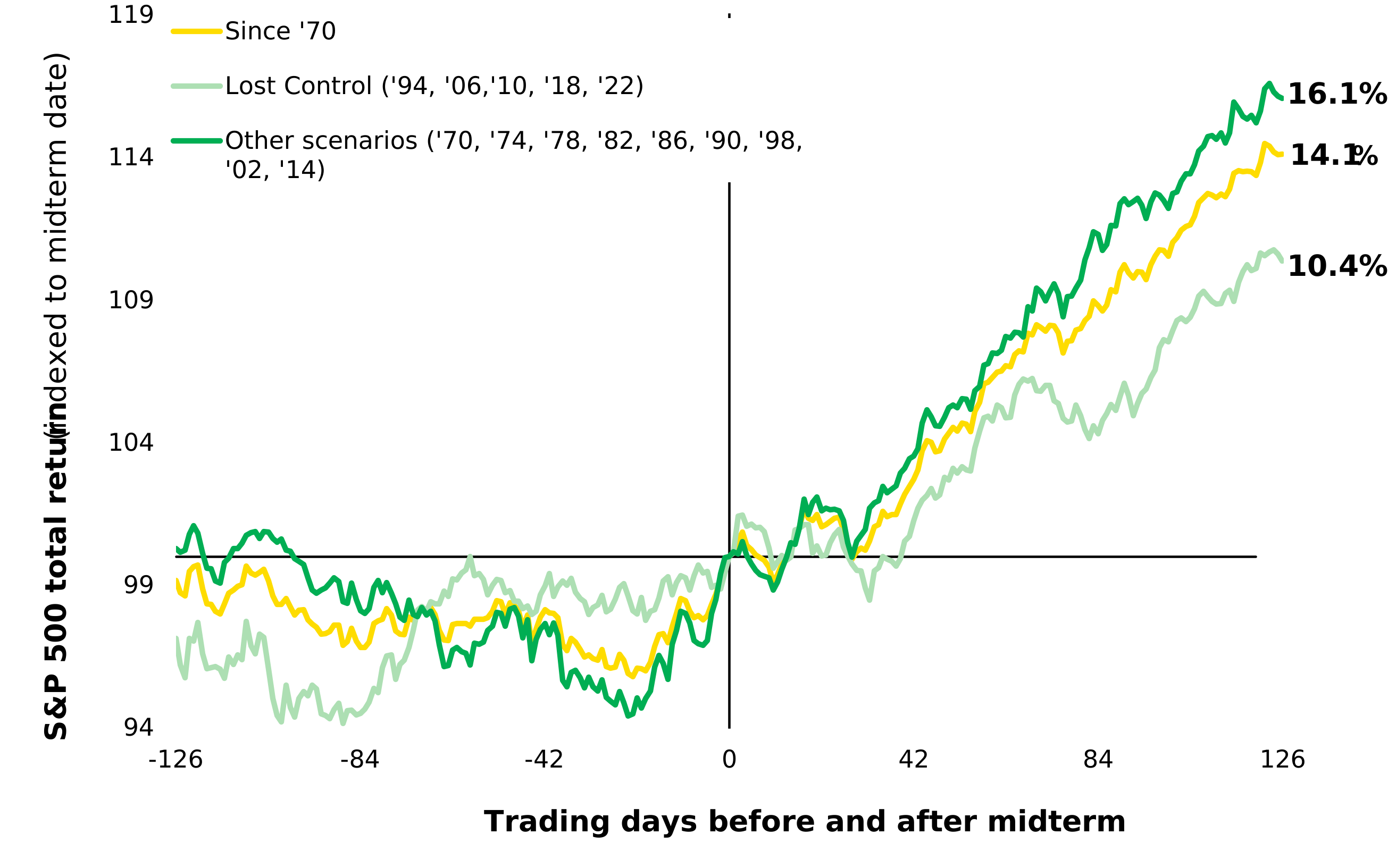
Historically, midterm election years have been associated with more subdued market returns. But as the election nears, history has shown a tendency for stocks to rally.

Since 1990, the average S&P 500 return in non-midterm years was 12.3% vs. only 3% in midterm years. But that masks large dispersions at the sector level: Healthcare (10.7% avg) and Energy (8.9% avg) have historically held up better, while Industrials (0.6% avg) and Financials (-0.6% avg) have tended to drag the market down in midterm years.9

In the last 56 years, we have seen the market start to rally on average around a month (22 trading days) before a midterm election, as polling data provides clearer expectations of results. Then, as event risk passes following the election, equities have historically experienced tailwinds with an average return of 14.1% in the six months that follow.

The outcome of the election also has affected performance. We come into the 2026 midterms with one political party controlling the presidency and both houses of Congress. This “trifecta” has occurred six times since 1970. In only one scenario, in 1978, was the incumbent government able to maintain its control of all three branches.

This difficulty in keeping control matters, because the average 6-month forward return after midterms when the incumbent party loses control is materially lower (+10.4%) than in other scenarios (+16.1%). Still, we believe other durable themes such as AI will matter more for markets than politics – even in an election year.

Figure 4: S&P 500 total return performance, pre & post midterm years since 1970

Line chart S&P 500 performance since 1970

Source: Bloomberg, data as of March 30, 2026. Average indexed to midterm dates for midterm years: 1970, 1974, 1978, 1982, 1986, 1990, 1994, 1998, 2002, 2006, 2010, 2014, 2018, 2022. Midterm dates fall on the first Tuesday in November. Month approximations based on average of 21 trading days in a month. “Lost Control” defined as scenarios where government was controlling the presidency and both chambers of congress heading into the midterms, and lost control of at least one of them. Index performance is for illustrative purposes only. Index performance does not reflect any management fees or expenses. Indexes are unmanaged and one cannot invest directly in an index. Past performance does not guarantee future results.

Chart description: Line charts showing the average S&P performance indexed to the midterm date, six months before and after a midterm, in all midterm scenarios since 1970, those when the incumbents lost control of one chamber, and all other scenarios.


U.S. Equities: Valuations, AI & geopolitics

5. Where are opportunities in U.S. equities today?

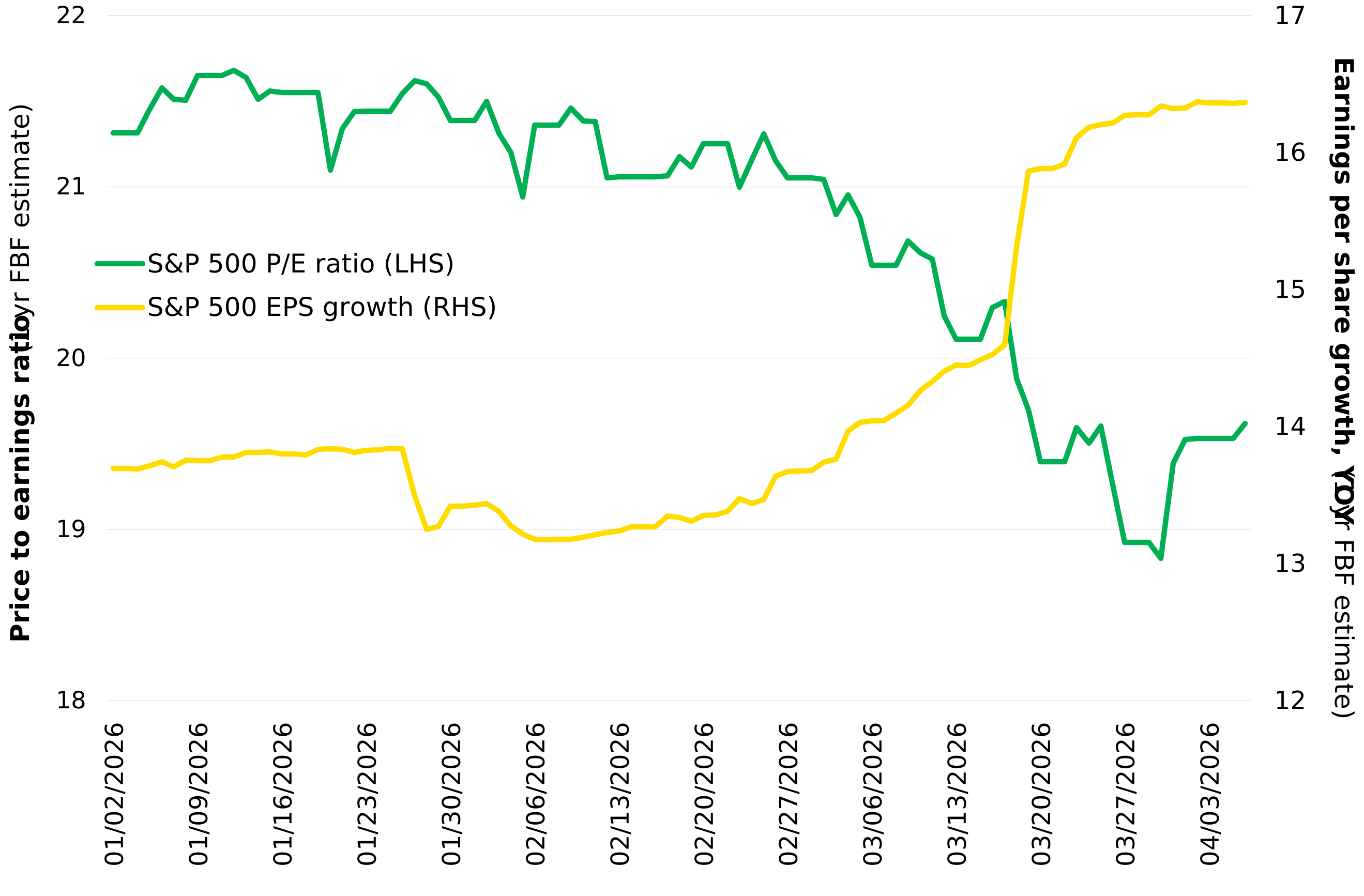
Falling stock prices, particularly in software, and improving earnings fundamentals have led to a reset in valuations for U.S. equities. While broad market valuations declined to multi-year lows in March, cheapening was especially pronounced in technology names exposed tothe AI theme. And while prices have grown more attractive, the earnings outlook has improved. Information Technology (IT) companies in the S&P 500 are now expected to boost earnings by 38% year-over-year in 2026 vs. expectations of 24% at the start of the year. The IT sector alone is expected to account for 63% of the S&P 500’s 2026 earnings growth.10

Technology continues to dominate fundamentals, but it isn’t the only sector lifting U.S. profits. Energy, materials, and utilities have all seen positive analyst revisions this year and are all now forecasted to deliver double-digit earnings growth.11

The resilient fundamental backdrop, strength in earnings, continued AI momentum, and attractive valuations lead to our preference for U.S. equities over other developed markets.

Figure 5: S&P 500 index valuations fall while earnings improve in 2026

Line chart SPX valuations in 2026

Source: Bloomberg data, as of April 7, 2026.  S&P 500 Price to Earnings ratio on a 1-year blended forward estimate basis is showcased on LHS, while S&P 500 earnings per share growth year over year, 1-year blended forward estimate is shown on RHS. Index performance is for illustrative purposes only. Index performance does not reflect any management fees or expenses. Indexes are unmanaged, and one cannot invest directly in an index. Past performance does not guarantee future results. Forward looking estimates may not come to pass.

Chart description: Line chart showing the one year forward S&P 500 P/E ratio (shown on the left Y axis) and the 1 year forward EPS growth (shown on the right Y axis) since the start of 2026.


Fund to consider

6. Should investors favor growth or value in 2026?

Coming into 2026 we had a preference for value, citing a cyclical upswing in growth, fiscal stimulus embedded in the One Big Beautiful Bill Act, and looming Fed cuts leading to a steeper yield curve. Now, conflict in the Middle East has modestly shifted our preference: economic growth remains resilient, but higher energy costs and delayed Fed easing may weigh on the consumer.12

With technology earnings growth driven by ongoing AI adoption, we see the sector as relatively less sensitive to consumer spending, and large-cap companies as better suited to weather higher interest rates. Value and momentum remain valuable diversifiers.

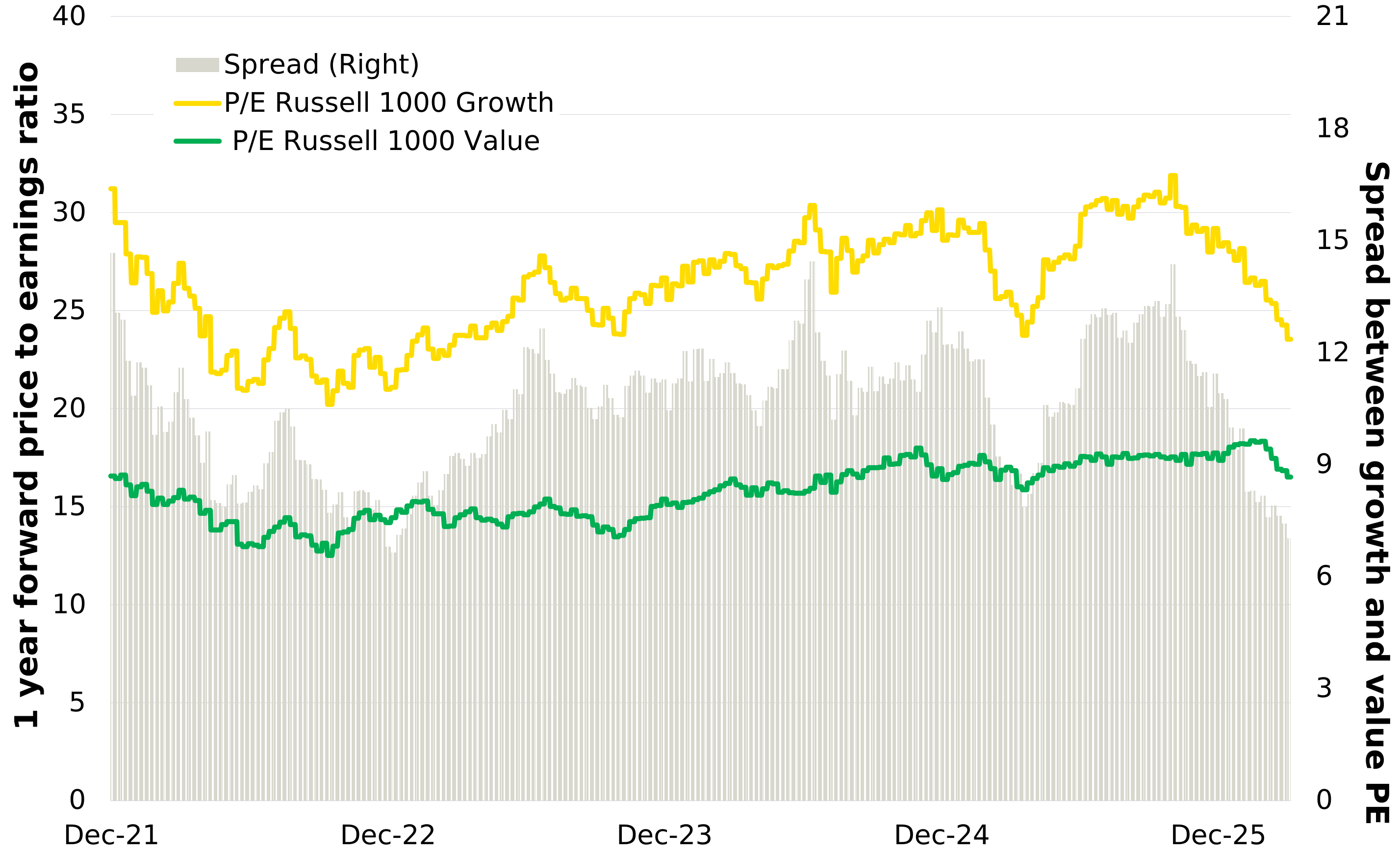
  • We adopt a balanced stance between growth and value. Earnings growth has remained strongest in growth and technology, reducing concerns about valuations. The spread in relative valuations between growth and value has compressed significantly (Figure 6). Earnings growth is more concentrated than forecasted at the start of the year, while value, particularly energy-linked exposures, has become more expensive with the rise in crude oil prices. Still, we believe value exposures can provide valuable diversification benefits to growth-heavy portfolios – a key reason for our balanced approach.
  • Small cap equities face ongoing headwinds. Smaller companies have tended to outperform in early-cycle recoveries, when interest rates are below trend and growth is above trend.13 But current sentiment, financing conditions, and macro uncertainty remain less supportive, keeping our confidence in small caps subdued. While we have a conviction in large caps more broadly, small caps have the potential to participate in periodic low-quality, high-risk asset rallies.
  • We remain nimble: We keep our preference for solutions that can actively rotate between style and factor exposures.

Figure 6: The valuation differential between large cap growth and large cap value has narrowed

Chart showing valuation differential

Source: Bloomberg, as of Dec. 31, 2025. Showing 12-month blended forward P/E ratios for the Russell 1000 Growth Index and Russell 1000 Value Index from Dec. 1, 2021 to Dec. 31, 2025. Spread is the difference between the 12 m forward P/E Russell 1000 Growth index and the 12 m forward P/E Russell 1000 value index. Forward looking estimates may not come to pass. Index performance is for illustrative purposes only. Index performance does not reflect any management fees or expenses. Indexes are unmanaged and one cannot invest directly in an index. Past performance does not guarantee future results.

Chart description: Combination chart with lines showing the one year forward P/E values for Russell 1000 growth and Russell 1000 value index to the left, while showing the difference between the two in the shaded areas indexed to the right, from Dec. 2021 to Dec. 2025.


Funds to consider

7. What equity themes are driving market leadership?

Themes such as AI and geopolitical fragmentation have become core macro forces shaping growth, inflation, and market leadership. AI has evolved beyond narrow mega-cap technology leadership into a broad, cross-sector opportunity set, spanning power generation, data center buildout, and hardware supply chains.

Meanwhile, recent spikes in geopolitical tensions are bringing energy security and independence into focus. Both are creating opportunities across the energy value chain—from traditional oil production to grid modernization—supported by increased investment from both governments and the private sector globally to meet rising energy demand. Investments in power grids alone exceeded $470 billion in 2025 and are projected to rise by 16% annually to meet surging renewable energy demands.14

We remain constructive on structural thematic growth, but rapid shifts in winners and losers require more deliberate allocation decisions. A perennial preference for value exposures leaves the average investor with a financial advisor and a “moderate risk”  portfolio with just 28% exposure to companies with material AI exposure in their equity sleeve vs. 45% in the S&P 500 index.15

We believe in a more intentional approach to target the full AI value chain or complement broad exposures with a focused thematic sub-layer. For example, investors could seek exposures to all parts of the AI stack in an active strategy, or focus on the convergence of AI and geopolitics with power infrastructure, investing in the “picks and shovels” of AI while addressing energy supply bottlenecks.

Source: IEA, Dec. 31, 2025, Energy investment across regions and sectors in 2025, IEA, Paris. Subject to change.

Chart description: Bar charts showing investment in 2025 in $ Billions in the energy categories of Fossil Fuels, Renewables, Grids and storage, Nuclear and other clean energy, energy efficiency, and low emission fossil fuels for the regions of China, USA, European Union, Middle East, India, LatAm, and Africa.


Funds to consider

Fixed income and private credit analysis

8. Is private credit a systemic risk to the market?

We believe private credit is not currently exhibiting characteristics of systemic risk. Systemic risk would require widespread defaults, excessive leverage, and destabilizing liquidity spirals. The current environment is one of normalization and dispersion.

Private credit defaults are rising modestly, but from unusually low levels. Current default rates of about 2–3% remain below long-term averages (about 3.5%), and we believe even a move towards 7–8% would represent normalization rather than distress.16 Defaults remain idiosyncratic, with stress concentrated in pockets. A systemic event would likely require rising correlations and synchronized weakness – conditions not observed today.

Leverage and loss severity remain contained. Private credit is typically underwritten with conservative structures (about 40–45% loan-to-value), supported by strong documentation, concentrated lender groups, and covenant protections.17 This structural control is intended to help reduce the risk of disorderly loss transmission.

Liquidity concerns have been misrepresented in the media as “gating.” Redemption limits in private credit vehicles are a common design feature set forth in fund documents intended to ensure orderly liquidity. They exist to prevent forced-selling dynamics typical of systemic crises.

Software exposure represents dispersion within private credit portfolios, not a systemic risk to the asset class. Software platforms with embedded customer relationships have remained resilient, while seat-based models have faced pressure. While private credit has meaningful software exposure, equity selloffs do not automatically translate into fundamental credit risk for senior secured lenders. Equity returns are driven by long-term growth and terminal value assumptions, while private credit returns depend on near- to medium-term cash flow generation.

Source: Cliffwater Direct Lending Index, BlackRock. As of December 31, 2025. Returns are based on earnings before interest, taxes, depreciation, and amortization (EBITDA) basis. Realized gains can be driven by equity stubs, warrants, and gains on exited investments.  The figures shown relate to past performance. Past performance is not a reliable indicator of current or future results. Index performance returns do not reflect any management fees, or expenses. Indices are unmanaged and one cannot invest directly in an index. We exclude unrealized gains and losses in this chart. Long-term unrealized gains (losses) are approximately zero, as they either convert to net realized losses upon a credit default, or are reversed when principal is fully repaid.

Chart description: Bar chart showing trailing 12 month income return and realized gains (or losses) for the Cliffwater Direct Lending Index from 2015 to 2025.


9. Where are potential opportunities in fixed income?

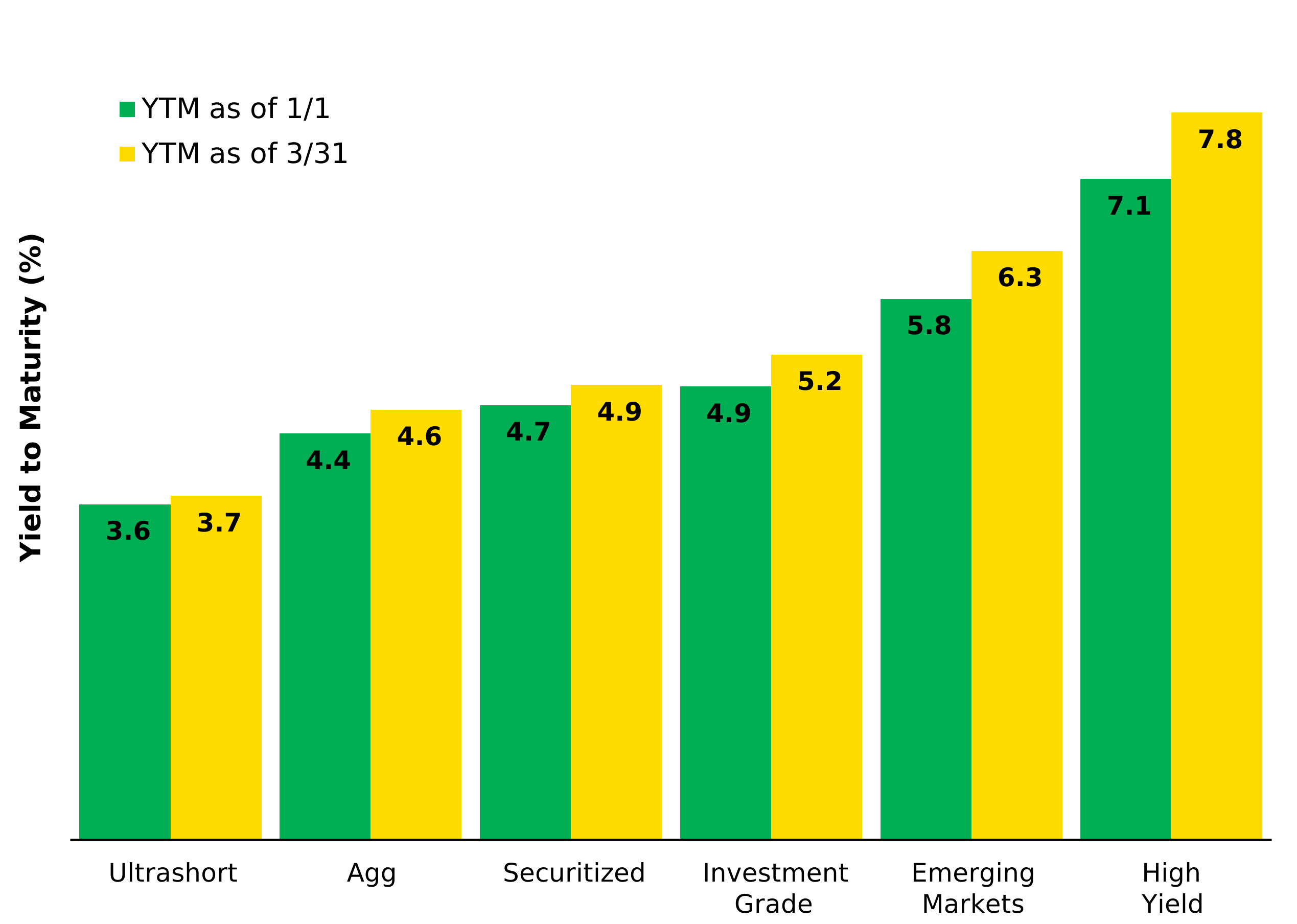
We favor the front end and belly of the yield curve, where we feel yields remain attractive after moving higher at the start of the conflict in the Middle East. Front-end yields are compelling, with 1-year tenors currently yielding ~3.7%, up nearly 22 basis points since early-March.18 Inflows into exchange-traded products reflect this preference, with short- and ultra-short-term bond ETFs gathering $53 billion year-to-date, representing 36% of all fixed income ETF inflows, compared to $18.6 billion into medium- and long-term bonds.19

The recent rise in short rates has been driven primarily by tighter interest rate policy expectations amidst elevated energy prices. This has also pushed real yields higher, making Treasury Inflation-Protected Securities (TIPS) increasingly attractive to target elevated real yields.

We remain cautious on longer-duration rates given persistent inflation, deficit concerns, and structural supply pressures, which may keep upward pressure on global long-end yields. Ongoing U.S. fiscal imbalances continue to support rising term premium for long-term bonds.

Wider spreads have created more compelling entry points in high-quality fixed income, particularly in sectors tied to the real economy and less exposed to technological disruption.

We see increasing value in “HALO” (Heavy Assets, Low Obsolescence) assets, which favor tangible assets that may be less subject to AI disruption. Commercial mortgage-backed securities (CMBS), residential mortgage-backed securities, and other asset-backed securities (ABS) exemplify this theme, with CMBS yields around ~4.7% and ABS yielding ~4.5%, providing a practical way to incorporate evolving AI risks into fixed income allocation.20

For investors considering international bonds, we prefer emerging market (EM) hard currency debt given the current regime of elevated energy prices and tighter global financial conditions. Wider spreads and improved all-in yields may offer more attractive carry, while limiting exposure to foreign exchange volatility and inflation pass-through that continue to weigh on local markets.

Figure 9: Yields have risen YTD, and are attractive compared to core bonds

Yield to Maturity (%)

Bar chart rising yields

Source: Bloomberg, BlackRock as of March 31, 2026. Ultrashort refers to the Bloomberg US Treasury Bills 0-3 Months Index, Agg refers to the Bloomberg US Aggregate Bond index, Securitized refers to the Bloomberg U.S. Securitized index, Investment Grade refers to the Bloomberg US Corporate TR Index, Emerging Markets refers to the Bloomberg Emerging Markets Hard Currency Aggregate Index, and High Yield refers to the Bloomberg US Corporate High Yield Index. Index performance is for illustrative purposes only. Index performance does not reflect any management fees or expenses. Indexes are unmanaged and one cannot invest directly in an index. Past performance does not guarantee future results.

Chart description: Comparison bar charts showing yield to maturity as of January 1st 2026 and yields to maturity as of 3/31, for the fixed income categories of Ultra-short duration, Aggregate, securitized products, Investment Grade, Emerging Markets, and High Yield. 


Funds to consider

International Equities: Conflict stalls performance, drivers in place

10. What’s the investment case for international stocks this year?

The beginning of 2026 saw a continuation of 2025’s international equity outperformance, with foreign stocks returning 11.4% through February, beating the U.S. stock market’s 0.7%.21 That outperformance was primarily driven by a weaker U.S. dollar and greater appetite for diversification, as well as strong earnings growth and accelerating AI-buildout demand, particularly in emerging markets.

But performance has weakened since the onset of the conflict in Iran in late February, with international equities down 10.7% in March.22 We believe the structural return drivers for international equities remain in place, however. While the dollar has strengthened recently, we see the Fed as better positioned to hold or cut rates given its dual mandate of full employment and price stability. Meanwhile, other central banks may need to hike rates to fight inflation – potentially leading to renewed dollar weakness.

Additionally, emerging market earnings growth has been robust (see Figure 10), driven by demand for semiconductors and compute, essential inputs for the AI-buildout, a trend we see as only beginning. Critically, 75% of the world’s chip manufacturing is centered in East Asia.23 Resource-rich Latin American countries such as Brazil may also be set to benefit amid rising demand for rare earth minerals, which are used in chip manufacturing.

Earnings growth expectations for EM are 28%, up from 12% in mid-2025, while selling driven by the recent energy shock has compressed multiples to the lowest levels in a year.24

Euro area growth has not been as robust as EM, but we see opportunities for diversification away from tech-heavy portfolios into sectors such as financials and industrials, potentially benefiting from higher rates and increased defense spending.

Source: LSEG Datastream as of April 21, 2026. U.S. as represented by MSCI USA Index Total Return, Euro area represented by MSCI European Economic and Monetary Union Index USD, total return,, USD. Emerging markets represented by MSCI Emerging Markets Index USD total return, Asia ex Japan represented by MSCI All Country Asia Pacific ex Japan Index total return USD, and World represented by MSCI All Countries World Index total return, USD. Index performance is for illustrative purposes only. Index performance does not reflect any management fees or expenses. Indexes are unmanaged and one cannot invest directly in an index. Past performance does not guarantee future results.

Chart description: Stacked bar charts showing total return YTD as dots and columns showing contribution to that return in the following categories of earnings-per-share growth, valuation, and dividends for the following equity markets: U.S., European Area, Emerging markets, Asia ex Japan, and World.


Funds to consider

Portfolio Insights: Look to liquid alts for diversification

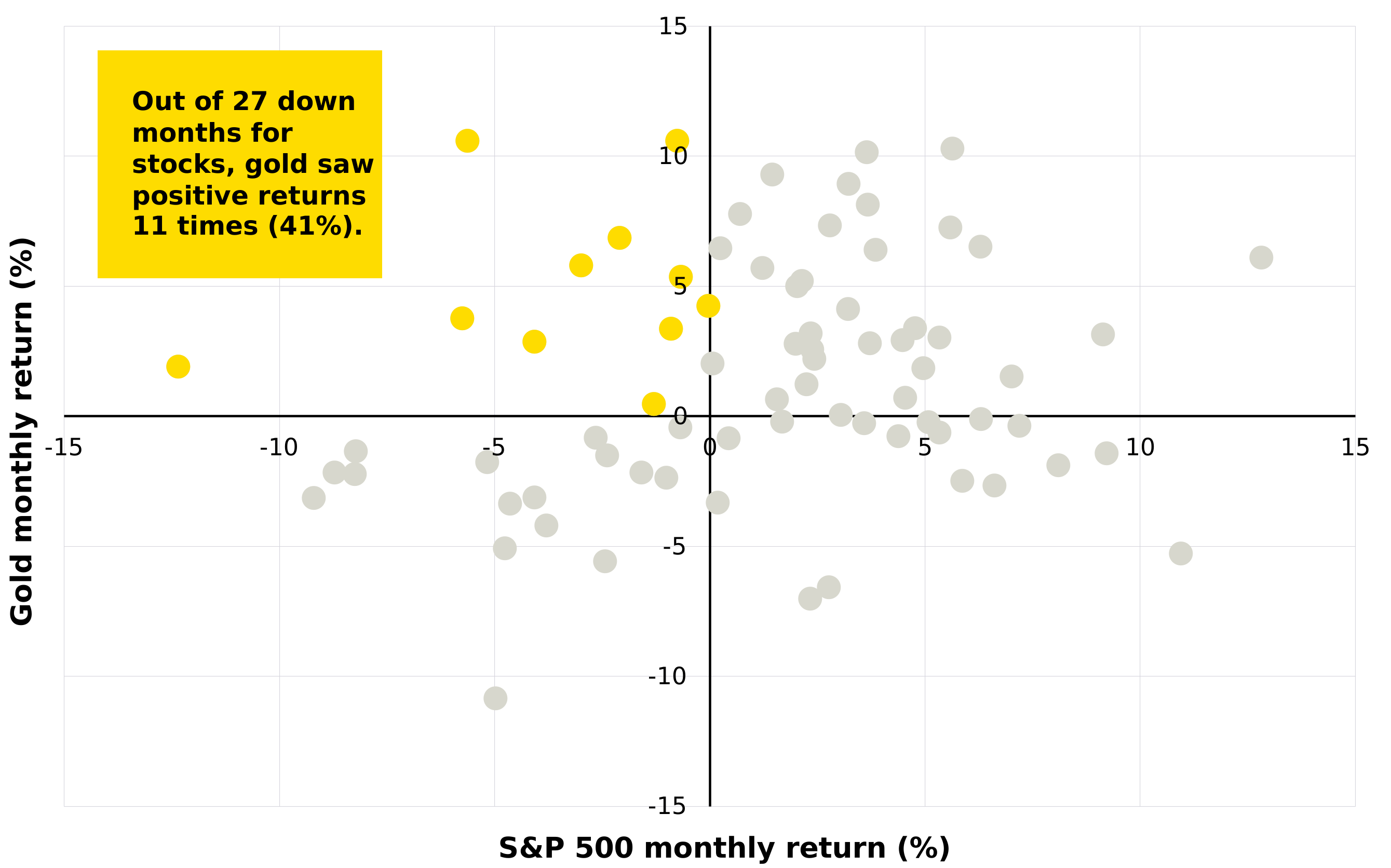
11. Why was gold down in March?

The recent spike in volatility has led to a rarity in asset performance, with simultaneous declines across equities, fixed income, and gold.25 This reflects a repricing of macro risks rather than a single shock. The escalation of hostilities in the Middle East pushed oil prices above $100 per barrel, reinforcing inflation concerns and leading markets to push back expectations for policy easing.26 This lifted bond yields, weighing on fixed income returns, while higher real yields and uncertainty around growth have pressured equities.

Higher real rates and a stronger U.S. dollar have also suppressed gold’s performance.27 Regional disruptions, including impacts from the closure of the Strait of Hormuz, alongside profit-taking after strong inflows, have added to gold’s pullback. Even so, we continue to believe in the structural case for gold. With cleaner positioning and more attractive entry levels, we favor gold as a diversified allocation in portfolios, particularly around potential debasement risks.

More broadly, we believe that more frequent bouts of volatility call for owning a broader basket of hedges in commodities and other alternative assets to capture a wider set of diversifiers.

Figure 11: Gold has provided ballast in down months for stocks

Scatter plot gold has provided ballast

Source: Morningstar as of 3/31/2026. Data depicted is from 1/1/2020 – 3/31/2026. Stocks represented by the S&P 500 index and Gold by the S&P GSCI Gold Spot index. Index performance is for illustrative purposes only. Index performance does not reflect any management fees or expenses. Indexes are unmanaged and one cannot invest directly in an index. Past performance does not guarantee future results.

Chart description: Scatterplot showing monthly returns for Gold based on spot price on the Y-axis, and the monthly returns for the S&P on the X-axis since Jan 2020. The second quadrant, months where gold is positive and S&P was negative is highlighted for emphasis.


Funds to consider

12. What assets have provided diversification so far in 2026?

Traditional stock-bond diversification has been unreliable in recent years, and weakened meaningfully following the onset of the Middle East conflict in late February. The 20-day rolling stock-bond correlation rose to 0.72 in late March, its highest level since May 2024.28

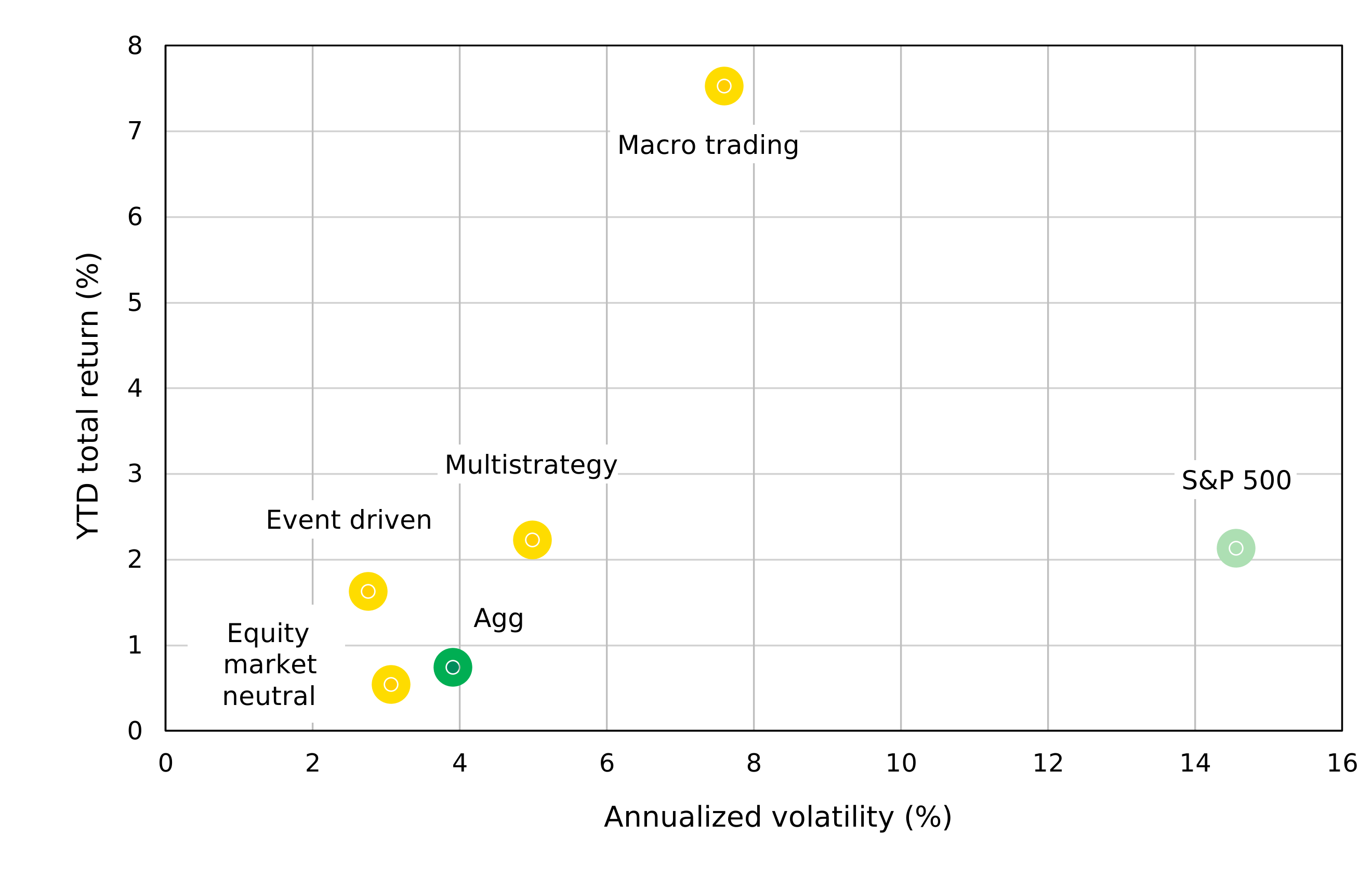
In a year where the traditional 60/40 portfolio has struggled, liquid alternative strategies are attracting attention. These strategies use techniques such as long/short, derivatives, and market-neutral investing to seek returns with low correlations to traditional assets. Crucially, these strategies are often lowly correlated with each other, making them key building blocks in a portfolio of diversified diversifiers.

While stocks and bonds have both been moving in the same direction for much of this year, liquid alternatives have done their job, delivering positive returns with lower annualized volatility than stocks.29

Amid elevated dispersion, rising stock–bond correlations, and geopolitical uncertainty, these strategies have benefited from a cross-sectional approach, going long expected outperformers and short underperformers to seek returns from relative value rather than market direction. This structure enables them to remain market-neutral, with low beta to traditional assets, resulting in low correlations to both stocks and bonds and more stable return profiles.

As a result, strategies such as market neutral have provided meaningful diversification and downside resilience during recent market turbulence, as shown in Figure 12. This pattern has held up in recent history, as the market neutral strategy has posted positive returns 60% of the time during down months for stocks from 2020–2025, outperforming gold (41%) and bonds (24%) as a buffer on the downside.30

Investors have taken notice. Financial advisors and institutional clients consider liquid alts as a credible portfolio diversifier, selected by over 20% of polling respondents in March, and interest in liquid alts as a diversifier has jumped by half since the start of the Middle East conflict in late February.31

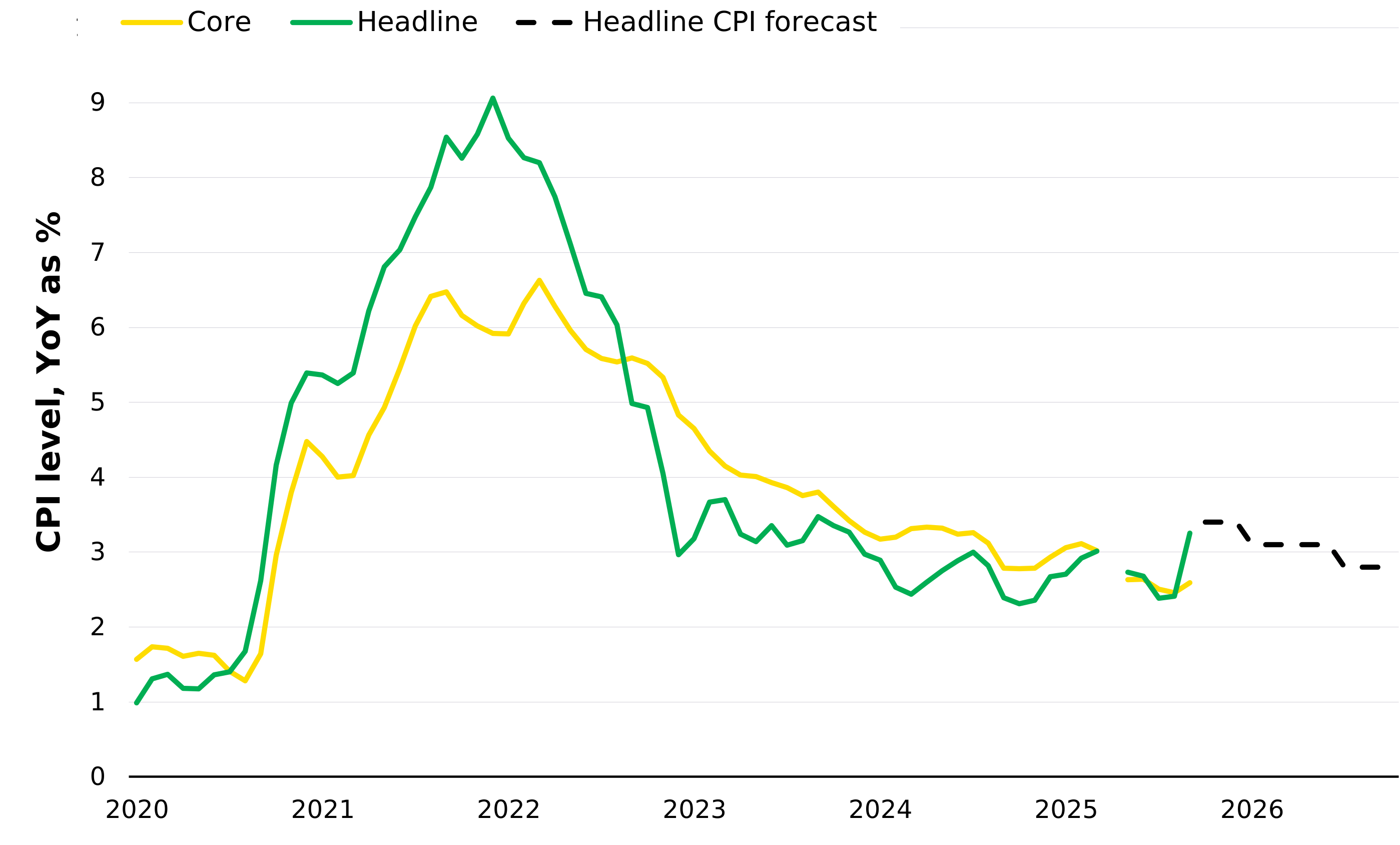
Figure 12: Liquid alternatives have delivered strong returns compared to stocks and bonds with lower volatility

Scatter plot

Source: Morningstar, BlackRock as of 4/14/2026. S&P 500 represented by the S&P 500 index, Agg by the Bloomberg U.S. Aggregate Bond index, and liquid alternative strategies by their respective Morningstar categories: Equity Market Neutral, Event Driven, Multistrategy, and Macro Trading. Index performance is for illustrative purposes only. Index performance does not reflect any management fees or expenses. Indexes are unmanaged and one cannot invest directly in an index. Past performance does not guarantee future results.

Chart description: Scatterplot showing YTD total return on the Y-axis and Annualized Volatility on the X-axis, for the Equity Market Neutral, Event Driven, Multistrategy, and Macro Trading Morningstar categories as well as the Agg and the S&P 500.


Fund to consider

13. How are investors positioning their portfolios right now?

Clients are turning more risk-on following the announcement of the ceasefire in the Middle East. Our latest polling shows 42% of investors are neutral, while bullish sentiment (40%) now outweighs bearish (17%), after bearing briefly outweighed bullish in March. 

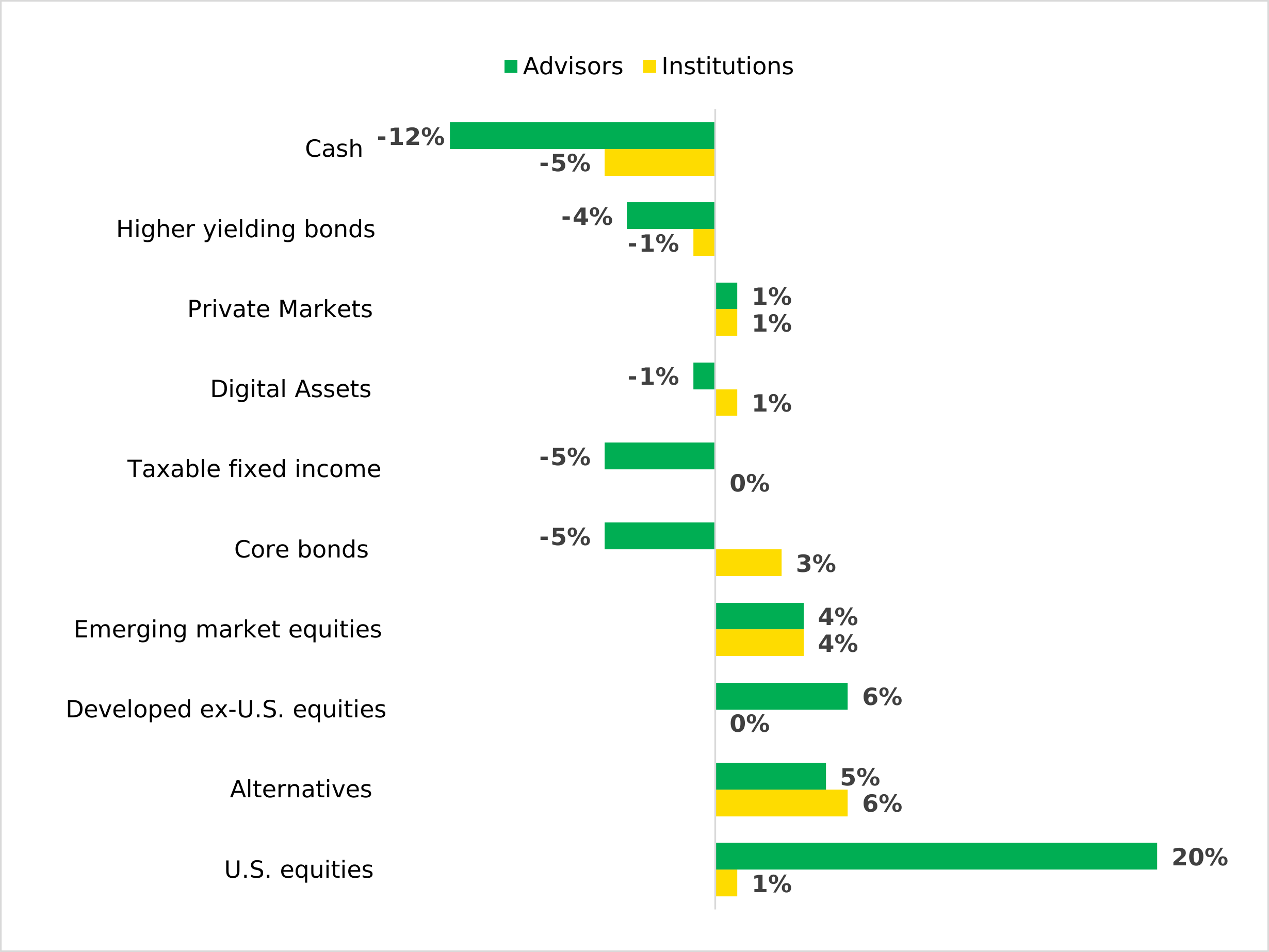
U.S. equities have risen to be the highest conviction net allocation overall, even if demand differs among client-types. Advisors are also leaning into U.S. equities (+20% net), while demand among institutional clients is essentially flat (+0.56%). Investors are primarily funding using cash, with a net reduction rate of -12%.32 Alternatives see the most consistent demand for additions among both client types.

Despite strong interest in alternatives, financial advisors remain under allocated. The average allocation among advisors who hold alternatives is ~7%, only 52% of moderate-risk portfolios include alternatives, highlighting potential room for further adoption.33

ETF flows underscore the cautious shift: equity inflows slowed to $66 billion in March, and more than half of fixed income flows moved into ultra-short exposures.34

Figure 13: Planned asset class moves differ among client-type

Where do you plan to add exposure over the next 3 months? vs. Where do you plan to reduce exposure over the next 3 months?

Bar chart asset class movement

Source: Polling conducted by BlackRock Investment and Portfolio Solutions, as of April 15, 2026. Answers reflect 1,569 unique respondents. The strategies discussed are strictly for illustrative and educational purposes and are not a recommendation, offer or solicitation to buy or sell any securities or to adopt any investment strategy. There is no guarantee that any strategies discussed will be effective.

Chart description: Bar chart, showing planned additions/reductions within portfolios amongst various asset classes in the next 3 months for institutions and advisors.


Photo of Gargi Pal Chaudhuri

Gargi Pal Chaudhuri

Chief Investment and Portfolio Strategist Americas at BlackRock

Photo of Kristy Akullian, CFA

Kristy Akullian, CFA

Head of iShares Investment Strategy

David Jones

Investment Strategist

Jasmine Fan, CFA

Investment Strategist

Samuel McClellan, CFA

Investment Strategist

Mark Peterson

Investment Strategist

Faye Witherall

Investment Strategist

Jon Angel

Investment Strategist

Oliver Hering

Investment Strategist

Annie Khanna

Investment Strategist

John Huebner

Investment Strategist

Maxine Vidal

Portfolio Strategist

Mason Hook

Portfolio Strategist

Emily Fredrix Goodman

Editor

Emily Bond

Contributor

Aaron Task

Contributor