How to Invest in ETFs: A Beginner's Guide

Brad Zucker, CFA Jul 20, 2026 CORE

Three ways to trade iShares ETFs

While you can’t purchase our funds directly on our website, investors have multiple options for buying iShares ETFs:

Fidelity Investments

At Fidelity, you can start with as little as $1 when you buy fractional shares of iShares ETFs.
By clicking on the link below, you will leave iShares.com.

Online Brokerage Account

Buy iShares ETFs through any brokerage platform.

Financial advisor

Talk to your financial professional to explore how iShares ETFs may fit your investing goals.

Key takeaways

  • ETFs can provide diversified exposure to stocks, bonds, and other asset classes through a single investment.
  • Low costs, diversification, and accessibility have made ETFs a popular choice for long-term investors.
  • Build an ETF portfolio aligned with your goals and risk tolerance; broad-market ETFs may help simplify diversification.

What Is an ETF?

An ETF, or exchange-traded fund, is a fund that holds a basket of securities and trades on stock exchanges throughout the trading day. Many ETFs track indexes such as the S&P 500, though ETFs can also use active investment strategies.

ETFs combine diversification with the flexibility of intraday trading.

Because ETFs trade like stocks, investors can buy or sell ETF shares whenever markets are open. Prices fluctuate throughout the day as the market value of the ETF’s holdings change.

Key ETF characteristics include:

  • Diversification potential via broad asset-class access
  • Intraday trading flexibility
  • Transparency of holdings
  • Tax efficient structure
  • Low costs

Why Do Investors Use ETFs?

ETFs have become increasingly popular because they combine diversification with trading flexibility and easy access. For example, investors seeking broad market exposure may use ETFs to access hundreds of companies or bonds – or a combination -- through a single investment.

ETFs may provide exposure to:

Investors often use ETFs because they can provide broad market exposure without requiring extensive research into individual securities. ETFs may also make it easier to implement a diversified investing strategy aligned with long-term goals.

How to Start Investing in ETFs

Investors can buy ETFs through a standard brokerage account with relatively low investment minimums.

Starting investing in ETFs usually begins with choosing an account and identifying long-term financial goals. No matter where you are in your financial journey or what your goals may be, one timeless principle tends to hold true: The sooner you start investing and the longer you stay invested, the more chance you have of meeting your investing goals.

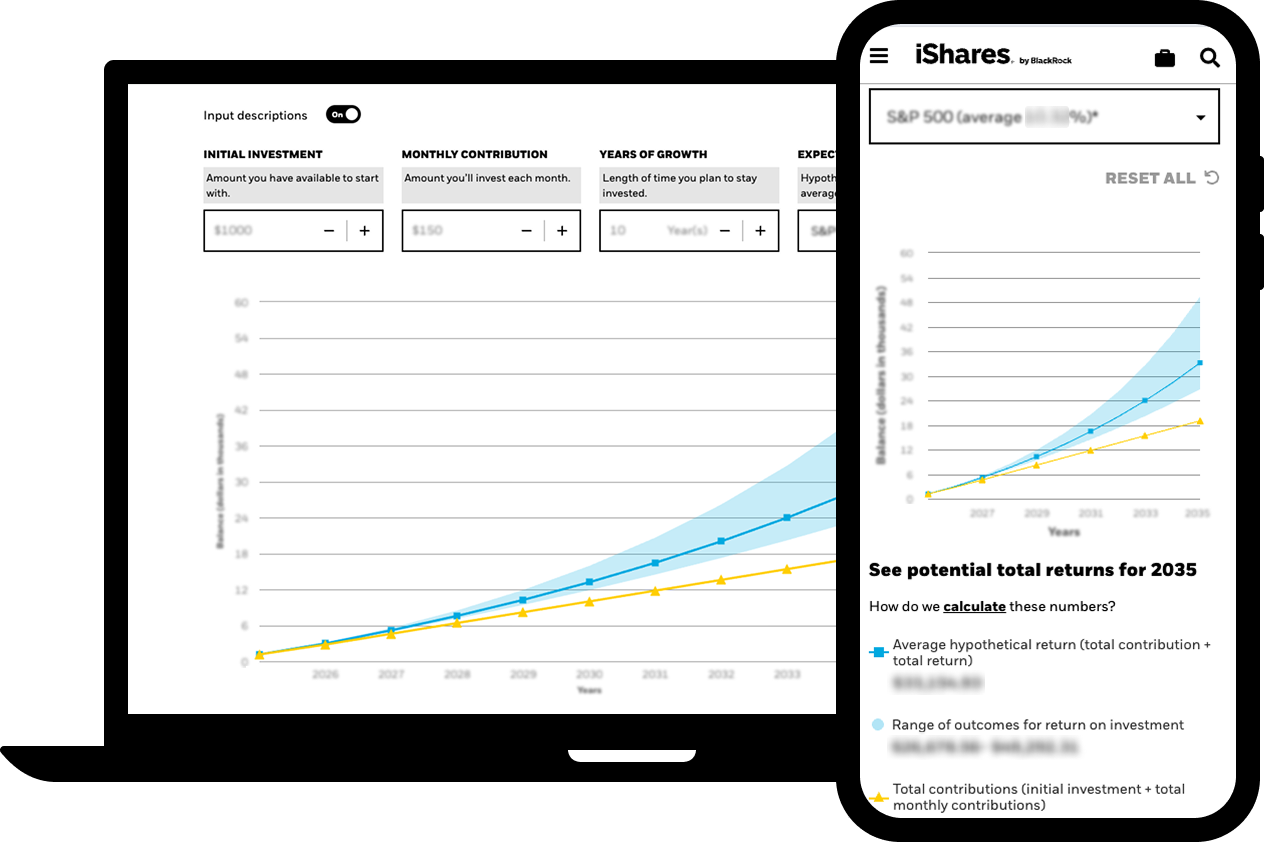
If an investor established an automated investing plan to put $250 to work each month in the S&P 500 over the last 40 years, she would have seen her account grow to about $1.63 million dollars, and it would have only taken $123,000 of principal to get there thanks to strong market performance and the power of compounding.1

The iShares Investment Growth Calculator demonstrates what you could potentially earn from recurring investing in just a few steps.

Some new investors may wonder whether ETF investing is complicated. In practice, the process can often be broken into a series of straightforward steps.

Step 1: Define Your Investing Goals

Begin by identifying why you are investing.

Common goals include:

  • Retirement savings
  • Building long-term wealth
  • Saving for education
  • Generating investment income

Your goals may influence both your investment strategy and time horizon.

Step 2: Open a Brokerage Account

Most investors buy ETFs through a brokerage account, which provides access to ETF trading and portfolio management tools.

Common account types include:

  • Taxable brokerage accounts
  • Traditional IRAs
  • Roth IRAs
  • Employer-sponsored retirement accounts

Step 3: Understand Your Risk Tolerance

Risk tolerance reflects your comfort level with market fluctuations.

Investors with longer time horizons may be able to tolerate more volatility than those approaching a major financial goal.

Step 4: Research ETFs

Review each ETF's:

  • Investment objective
  • Investing strategy
  • Holdings
  • Historical performance
  • Asset class exposure
  • Risk profile

This information can be found in a fund’s prospectus. Understanding these aspects can help ensure the ETF  aligns with your objectives.

Step 5: Compare Costs and Liquidity

Two important considerations include:

Expense Ratio

The annual fee charged by the ETF.

Liquidity

The ease with which ETF shares can be bought and sold.

Higher liquidity may contribute to narrower bid-ask spreads and potentially lower trading costs.

Step 6: Place an ETF Trade

After selecting an ETF, investors can place a buy order through their brokerage account.

Many brokerage platforms also support fractional shares, which may allow investors to start with smaller dollar amounts.

Step 7: Monitor and Rebalance Periodically

Over time, market movements may cause a portfolio to drift away from its target allocation. For example, after a period of strong stock market performance you may end up with a greater amount of your total wealth invested in stocks than you are comfortable with.

Periodic rebalancing is important to ensure continued alignment with investment objectives and risk tolerance.

Caption:

7 Steps to Investing in ETFs.

StepDescription
1. Define Your investing GoalsWhat's the purpose of the portfolio? Retirement planning and saving for college or a house are common examples.
2. Open a Brokerage AccountYou may buy ETFs via a brokerage account, which provides access to ETF trading and portfolio management tools.
3. Assess Your Risk ToleranceHow much volatility can you reasonably tolerate?
4. Determine Your Time HorizonThe amount of time before assets are needed often influences portfolio construction decisions.
5. Select an Asset AllocationChoose a mix of stocks, bonds, and other investments aligned with your objectives.
6. Build With Diversified InvestmentsMany investors may use diversified ETFs and funds to gain broad exposure efficiently.
7. Monitor ProgressPortfolios may be reviewed periodically to ensure they remain aligned with objectives.

How Much Money Do You Need to Start?

The amount required varies by brokerage platform and ETF share price.

Because many brokers offer fractional shares:

  • Investors may have the opportunity to start with as little as $1.
  • Investors can make recurring contributions through automatic investing.

How to Choose ETFs

The best ETF for an investor depends on their individual goals, time horizon, and risk tolerance.

With thousands of ETFs available globally, selecting the right one often starts with understanding what role the investment will play within a portfolio.

What are Some Factors Investors May Evaluate?

Expense Ratio

Lower costs may allow investors to keep more of their returns over time.

Holdings

Review the securities the ETF owns and ensure they align with your investment objectives.

Diversification

Broadly diversified ETFs may help reduce exposure to any single company, sector, or region.

Liquidity

More liquid ETFs often trade with tighter bid-ask spreads, which means lower trading costs.

Passive vs. Active ETFs

Passive ETFs generally seek to track an index.
Active ETFs seek to outperform a benchmark through portfolio manager decisions.

Investor Use Cases

Beginner Investors

Often prioritize broad-market diversification and simplicity.

Retirement Savers

May focus on long-term growth and asset allocation.

Long-Term Investors

Often emphasize consistency and low costs.

Goal-Based Investors

More liquid ETFs often trade with tighter bid-ask spreads, which means lower trading costs.

Passive vs. Active ETFs

May align ETF selections with specific financial objectives.

Investors interested in building diversified ETF portfolios may consider combining stock and bond exposures based on their goals and risk profile.

ETF Glossary of Terms

Caption:

A quick guide to ETF terms.

Key TermWhat It Means
Expense RatioAnnual management fee
LiquidityEase of trading
Bid-Ask SpreadDifference between buy and sell prices
DiversificationExposure across many investments
Asset AllocationDistribution among asset classes

Common ETF Investing Strategies

Many ETF investors focus on long-term diversification rather than short-term trading.

While there is no single approach that works for everyone, these are common ETF investing strategies.

Buy-and-Hold Investing: Buy-and-hold investors purchase ETFs and maintain positions through market cycles. This approach seeks to benefit from long-term market growth while reducing the temptation to react to short-term volatility.

Dollar-Cost Averaging: Dollar-cost averaging involves investing fixed amounts on a recurring schedule. Potential benefits include:

  • Investing consistently
  • Reducing timing decisions
  • Building disciplined habits

Core-Satellite Portfolios A core-satellite strategy combines:

  • Core holdings for broad market exposure
  • Satellite positions for targeted opportunities

For example, a diversified stock ETF may serve as a core portfolio holding, while sector ETFs may provide more focused exposure.

Retirement Investing: Many investors use ETFs within retirement accounts because of their diversification and flexibility. Investors focused on long-term retirement investing often prioritize broad asset allocation and consistent contributions.

Income Investing: Bond ETFs and dividend-focused ETFs may help investors seek income while maintaining diversification.

ETF Risks and Common Mistakes

Although ETFs offer many benefits, they are not risk-free. Like all investments, ETFs involve market risk and may lose value.

ETF risks depend largely on the underlying investments. Equity ETFs may experience stock market volatility, while bond ETFs can be affected by interest rates and credit risk.

Here are some of the additional risks ETF investors should be aware of:

Market Volatility: ETF prices fluctuate as underlying investments rise and fall.

Periods of market stress can create significant short-term losses.

Overconcentration: Investing heavily in one sector, country, or theme may increase portfolio risk. Diversification may help mitigate concentration risk.

Performance Chasing: Buying investments solely because they recently performed well may increase the likelihood of disappointment. Past performance does not guarantee future results.

Leveraged ETFs: Leveraged ETFs are normally considered higher risk and seek amplified daily returns and may not be appropriate for all investors. Leveraged ETFs are generally designed for short‑term trading and may not be appropriate for long‑term or inexperienced investors. Their performance over longer periods can differ significantly from investor expectations.

Emotional Investing: Reacting to headlines and market volatility may lead investors to abandon long-term plans. Learn more about emotional investing and other common mistakes investors make.

Trading Too Frequently: Frequent trading can increase costs and potentially undermine long-term results.

Investors seeking additional education on understanding investment risk may benefit from evaluating how risk tolerance affects asset allocation decisions.

Taxes and ETF Investing

Taxes can affect investment returns, especially in taxable brokerage accounts.

While taxes should not drive every investment decision, understanding basic tax concepts may help investors make more informed choices.

  • Many ETFs distribute dividends earned from underlying holdings. These distributions may be taxable depending on account type.
  • Capital gains occur when investments are sold for more than their purchase price.

Because of their structure, ETFs tend to be tax-efficient investment vehicles for two key reasons

Low turnover: The majority of ETFs are index funds, which typically trade less frequently than actively managed funds. Low turnover means fewer sales of stocks that have risen in price, resulting in the generation of fewer realized capital gains within the fund. Thus, ETF owners are more likely to incur capital gains taxes when they sell their investment, rather than paying taxes on capital gains distributions from the fund.

ETF shareholders are generally insulated from the actions of other investors: Investors buy and sell ETF shares with other investors on an exchange. As a result, the ETF manager doesn't have to sell holdings — potentially creating realized capital gains — to meet investor redemptions. If you're invested in an ETF, you get to decide when to sell, making it easier to avoid those higher short-term capital gains tax rates.

Investors researching ETF tax considerations should understand how account selection may influence after-tax outcomes and may consider consulting with a tax professional.

Conclusion

Many investors assume successful investing starts with finding the "right" ETF. In reality, long-term outcomes may depend more on building disciplined investing habits, maintaining diversification, and staying invested through market cycles rather than selecting any single fund.

Investing in ETFs can help investors build diversified portfolios with relatively low costs and flexibility. To get started, investors typically open a brokerage account, choose ETFs aligned with their goals and risk tolerance, and invest consistently over time.

Understanding costs, diversification, and long-term investing principles can help investors make more-informed decisions.

What we're watching is how investors continue using ETFs to simplify portfolio construction while balancing growth opportunities, income needs, and risk management across changing market environments.

For investors looking to learn more, exploring ETF investing basics can help build foundational knowledge before selecting investments.

Frequently Asked Questions

Most beginners start by opening a brokerage account, identifying their goals, selecting diversified ETFs, and investing consistently over time.

The type of ETF will depend on an investor’s risk tolerance and goals. Investors may want to considered beginning with diversified broad-market ETFs because they provide exposure to many securities through a single investment.

The amount varies. Some brokerage platforms allow fractional-share investing, enabling investors to start with relatively small amounts.

Historical market growth and compounding may have increased the value significantly, though outcomes depend on the specific period and market performance.

Many investors use ETFs for long-term investing because they can provide diversification, low costs, and broad market exposure.

Set your goals on autopilot

A recurring investment plan allows you to buy fractional shares (or slices) of an investment, including ETFs, on a regular basis, starting from just $1 per month. It’s that simple.

Photo of Brad Zucker

Brad Zucker, CFA

Head of iShares Product Consulting