There are a multitude of choices available to investors when considering investments in municipal bonds, especially with the advent of ETFs and the wide variety of funds on offer. Let’s consider some of the main building blocks investors can use to construct a municipal bond portfolio.
Building Block 1: Geographic exposure - National vs. state-specific
Muni investors can consider choosing between bonds issued by the state in which they reside and/or national municipal bond funds or ETFs for broader exposure across states.
Investors should consider the benefits of the state and local tax exemption against the potential yield and diversification benefits that may come from a broader, national approach.
Investors in high-tax states typically get greater benefit from investing in-state, potentially drawing benefit from federal, state, and local tax exemptions. However, in low- or zero-income tax states, investors may not capture significant additional state and local tax advantages from holding state-specific bonds and may instead consider the diversification benefits of a national muni bond ETF.
Funds to consider: iShares National Muni Bond ETF (MUB) or iShares New York Muni Bond ETF (NYF), iShares Short-Term California Muni Active ETF (CALI)
Building Block 2: Duration - Short or long?
Similar to other fixed income securities, a municipal bond’s sensitivity to changes in interest rates is measured through its duration. Duration is defined as the change in value of a bond in response to a 1% change in interest rates. Generally, when interest rates have risen, prices typically have fallen, and vice versa. Municipal bonds with longer maturities generally have greater interest rate risk, and as such can have greater price swings.
Investors have sought the low or negative correlation that bonds have at times exhibited with equities as a source of diversification in their overall investment portfolios.5 In stock heavy portfolios, holding bonds with longer duration may be a source of potential offsetting return when stocks sell off. Many investors may not be willing to take this risk though and some may prefer to keep their duration shorter. Investors can also target intermediate duration or combine portfolios with shorter- and longer-dated bonds to seek blended outcomes, based on their risk tolerance and investment goals.
Funds to consider: iShares Short Maturity Municipal Bond Active ETF (MEAR) or iShares Long-Term National Muni Bond ETF (LMUB).
Building Block 3: Investment grade or high yield?
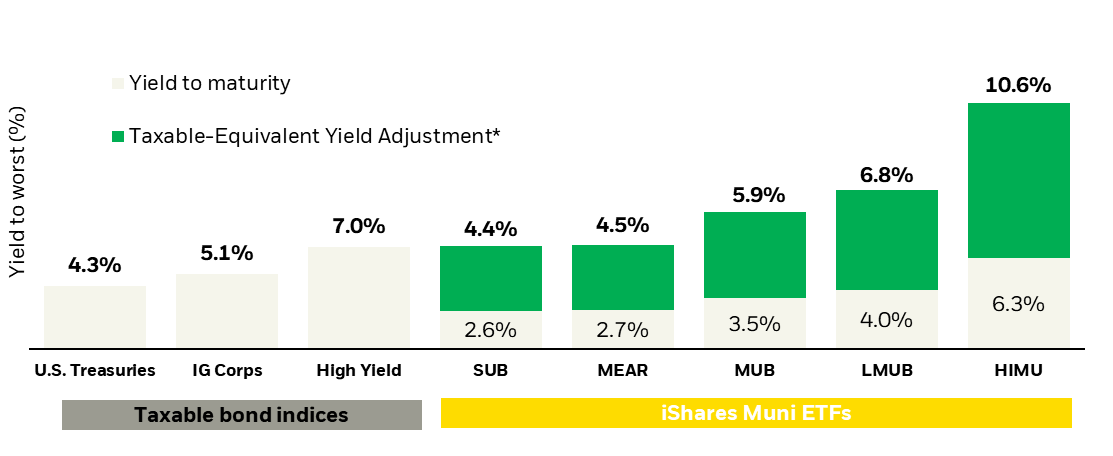
Another key type of risk in fixed income investing is ‘credit risk’ – the risk associated with the creditworthiness of a given issuer. This risk applies to municipal bonds, just as it does with corporate bonds. Investors seek greater compensation – in the form of yield – in exchange for buying the debt of a riskier municipality or project.
Like other fixed income securities, municipal bonds often come to market with an assigned credit rating from major agencies, which investors can leverage in their assessment of the bonds. Muni bonds with higher credit ratings have often offered lower yields than munis with lower credit ratings. Notably, the vast majority of high yield municipal bonds have come to market without a rating.6 Investors should consider the potential that muni bonds could lose value. Losing value is not always a result of “credit risk” as there could be an instance of a strong credit rated project has complications and cannot meet its obligations. While municipal defaults have been rare and have tended to be less frequent than those of corporate bonds,7 there are notable past examples such as Puerto Rico and the city of Detroit.8
Funds to consider: iShares Short-Term National Muni Bond ETF (SUB) or iShares High Yield Muni Active ETF (HIMU)
Building Block 4: Where to Hold Municipal Bonds?
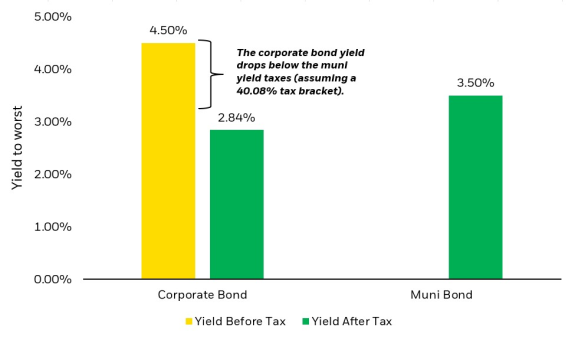
Finally, an important consideration for investors is where to hold their municipal bonds. Knowing why you hold them answers where to hold them. Because the primary appeal of municipal bonds is their tax-exempt income, investors have historically held them in taxable accounts, where the tax benefit can be fully realized. When municipal bonds are held in tax-advantaged accounts such as 401(k)s or traditional IRAs, the tax exemption may be less impactful, as these accounts already offer tax-deferred growth. By contrast, these tax-advantaged accounts are often used for taxable bonds, such as Treasurys or corporate bonds, where interest income would otherwise be taxed annually but can instead grow tax-deferred.
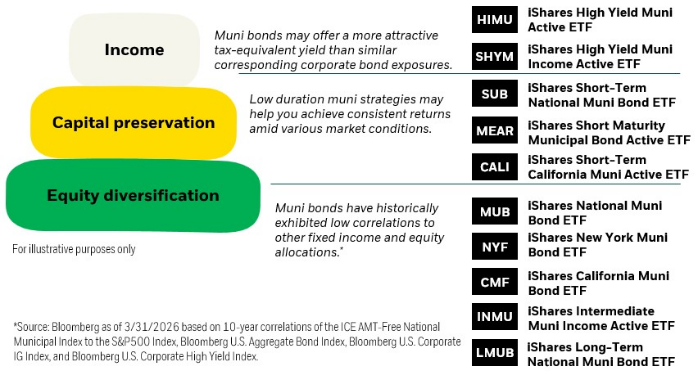
It is also important to understand what role munis play in an investor’s portfolio before selecting a specific exposure. The three typical roles of bonds in a portfolio are to diversify equity risk, preserve capital, or to generate income, and different exposures serve each of these purposes better, as illustrated in the diagram below.