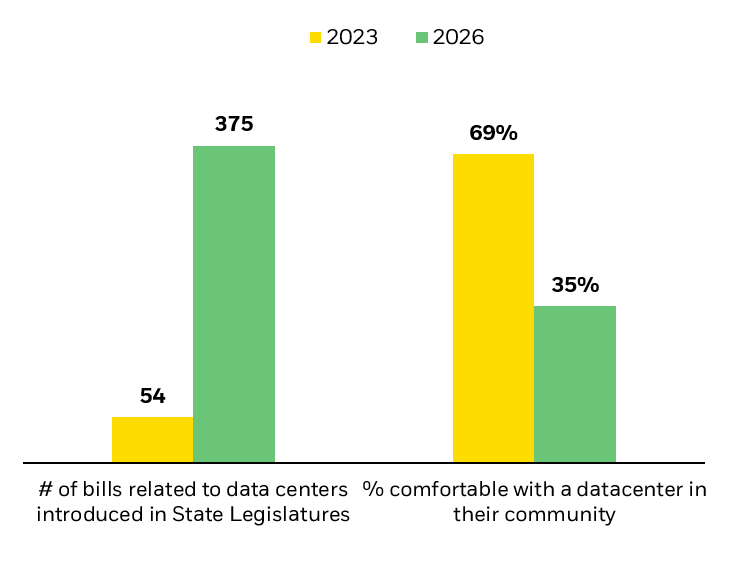
Ultimately, policy changes may slow the AI buildout, not derail it.
The fundamentals have not deteriorated nearly as much as price action suggests. Capital expenditure growth has accelerated every year, from ~30% in 2024 to ~60% in 2025 to ~100% in 2026, and still hasn’t caught up with demand.7 The three largest cloud providers (Amazon, Microsoft, Google) grew revenues by 56% year-over-year in Q3, accelerating from 48% in Q2.8
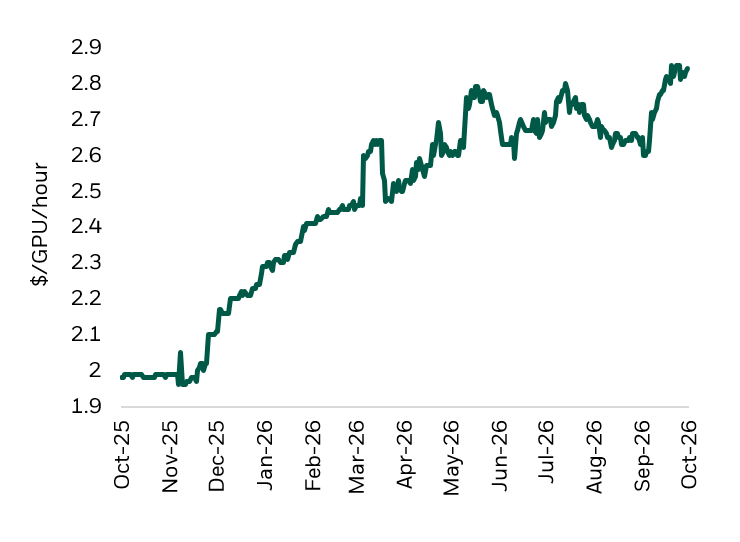
Another useful barometer of AI demand is the cost of renting computing power. Despite newer, more powerful chips coming to market, rental prices for Nvidia’s H100 chips are up about 35% year-to-date, including 14% since late September – a clear sign of just how tight supply remains.9
The magnitude of the selloff also reflects an unusually large unwind in investor positioning. Prime brokerage data points to the largest reduction in hedge fund equity exposure in more than 15 years, suggesting the sharp declines have been amplified by technicals rather than a broad retreat from AI by long-term investors.10
BlackRock polling supports that distinction: among respondents planning to make portfolio changes following the selloff, 70% intend to buy AI at lower valuations.11
We expect greater scrutiny of data center development to delay some investment, particularly beyond 2027. But the post-election selloff appears more like a reassessment of how quickly AI infrastructure can be built rather than a change in the underlying demand for it.