Bond ETFs: A durable foundation for modern portfolios

Apr 27, 2026 Fixed Income

Key takeaways

  • Fixed Income ETFs are playing an important role in modern portfolio construction; to date in 2026, inflows into bond ETFs are up 50% vs. year-ago levels.
  • We believe bond ETFs can help investors navigate the market’s defining trends including elevated cash balances, the demand for income, and the rise of both private market exposures and digital assets in portfolios
  • iShares offers a wide range of fixed income ETFs -- including active, systematic and outcome-oriented funds -- designed to help serve as an anchor in portfolios by providing income, diversification, and stability.

How ETFs are helping reshape fixed income investing

Fixed income ETFs are off to a record start to 2026, with U.S. inflows of $150 billion as of March 31, nearly 50% higher than inflows in the same timeframe last year.1

We believe these flows reflect the evolved role bond ETFs are playing in portfolios, and how they’re helping investors navigate the defining trends shaping the market today, as detailed in A durable foundation: How bond ETFs are powering a portfolio revolution.

These trends include:

  • Elevated cash balances
  • The demand for income, helping drive the rise of active and systematic fixed income ETF strategies
  • Expanding private market allocations
  • Accelerating digital asset exposure

How are elevated cash balances impacting fixed income investing? One of the most visible trends in recent years has been the rise in cash balances, which currently sit at over $18.8 trillion in bank deposits and $7.7 trillion in money market funds.2 Higher short‑term rates have made cash feel more attractive, especially during periods of uncertainty.

But as interest rates moved lower in prior cycles, cash yields tended to reset quickly.3

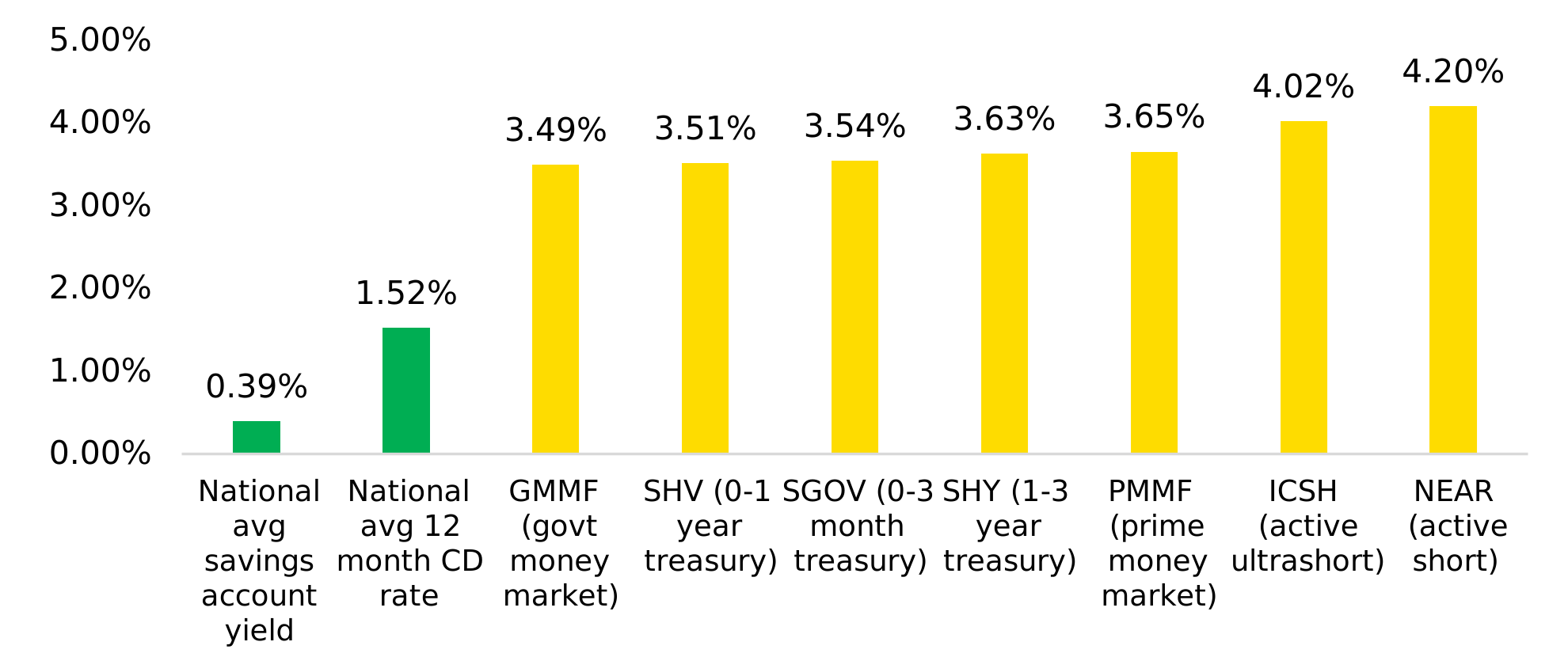
For investors looking to put cash to work without taking a large step up in risk, short‑duration bond ETFs can offer potential incremental yield pickup, while maintaining daily liquidity and flexibility.

Figure 1: Short Duration Bond ETFs to help manage excess cash allocations

30 Day SEC Yields of Select iShares Fixed Income ETFs (%)

Source: BlackRock, FDIC, iMoneyNet, as of March 31, 2026. National average savings account yield represents average interest rate paid on savings deposit accounts at U.S. insured depository institutions. National average 12-month CD rate is the average interest rate on 12-month certificates of deposit (CDs) with balances less than $100 million offered by insured U.S. depository institutions (banks and credit unions). iShares ETF yields are 30-Day SEC yields. It’s important to note that there are material differences between Savings accounts, CDs and ETFs, including investment objectives, risks, fees, and expenses. CDs are fixed income investments that generally pay a set rate of interest over a fixed time period until maturity, whereupon the principal is typically returned plus any interest earned. Early withdrawal from CDs may result in interest penalties. Most savings accounts pay compound interest, meaning earnings are added to the balance to create a larger base on which future interest is paid. Most savings accounts allow you to add or withdraw money at any time without incurring a fee. Both Savings accounts and CDs principal investments are insured by the FDIC up to applicable FDIC limits, while ETFs are not FDIC insured and may lose value. Most ETFs seek to track an index, before fees and expenses. ETFs trade on exchanges intraday and may incur brokerage commissions. ETF shares can be sold at market price, which may be higher or lower than NAV, and are not individually redeemable from the fund. Diversification may not protect against market risk. Transactions in shares of ETFs may result in brokerage commissions and tax consequences. There can be no assurance that an active trading market for shares of an ETF will develop or be maintained. Short term bond ETFs may experience greater volatility than cash equivalents.

Performance data represents past performance and does not guarantee future results. Investment return and principal value will fluctuate with market conditions and may be lower or higher when you sell your shares. Current performance may differ from the performance shown. For standardized performance and most recent month end performance, click on the fund’s ticker symbol: GMMF | SHVSGOV | SHY | PMMFICSH | NEAR.

Chart description: Bar chart showing that yields on short-term bond ETFs are currently higher than those of conventional savings vehicles.


For investors seeking to capture today’s yields, term maturity bond ETFs such as iShares iBonds® ETFs offer diversified exposure, regular income, and the flexibility of an ETF structure — while helping investors plan around known time horizons. iBonds ETFs are similar economically to term deposits but with the ability to trade out of the exposure before maturity.

Bond ETFs: Helping investors pursue income while managing risk

Income remains a top priority for many investors, but reaching for yield can come with tradeoffs. Extending duration, which is increasing a bond’s sensitivity to changes in interest rates, or moving lower in credit quality can increase sensitivity to rate changes or economic stress.

Bond ETFs now offer a wider toolkit to help address this challenge. Beyond traditional index exposure, investors can access:

  • Active bond ETFs, such as the iShares Flexible Income Active ETF (BINC), which offer investors access to harder-to-reach fixed income sectors through the convenience of an ETF wrapper.
  • Systematic Fixed Income ETFs, such as the iShares Systematic Bond ETF (SYSB), which combine human expertise with quantitative, data-driven techniques to refine risk and income.
  • Outcome‑oriented ETFs, such as the iShares 20+ Year Treasury Bond BuyWrite Strategy ETF (TLTW), which are designed to target specific objectives such as enhanced income or reduced rate sensitivity.

Used together, these approaches allow investors to pursue income in a more diversified and risk‑aware way, while maintaining transparency, scalability, and operational efficiency.

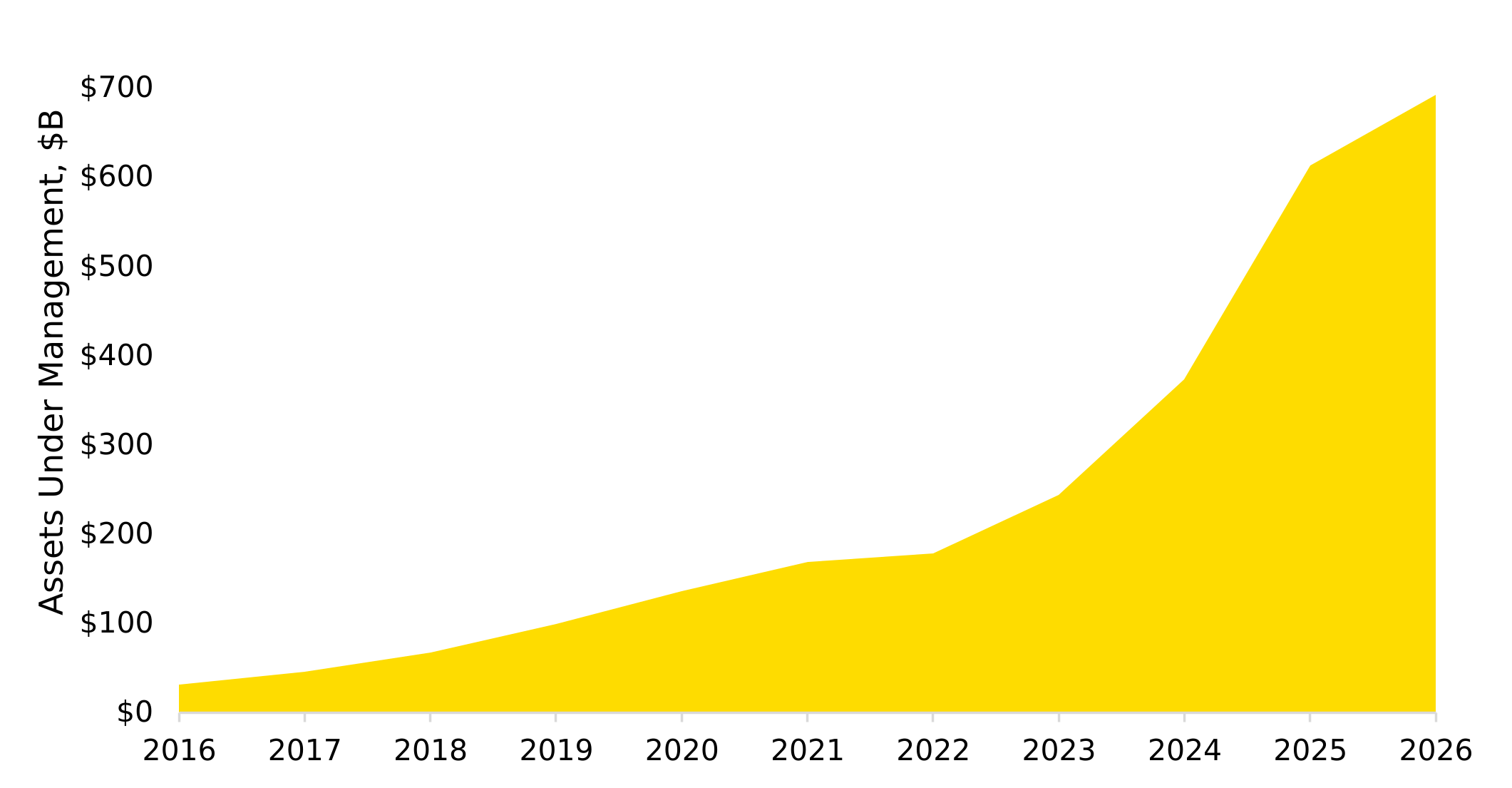
Spotlight on active ETFs: Active fixed income ETFs grew $212B in 2025, capturing 38% of global fixed income ETF flows.4

Figure 2: Active Fixed Income ETF Asset Growth

Global Assets Under Management, 2016 - 2026

Source: BlackRock Global Business Intelligence as of March 31, 2026.

Chart description: Area chart showing that global bond ETF AUM has grown from less than $100B in 2016 to over $690B in 2026.


What role can bond ETFs play alongside private markets?

We estimate investible opportunities across private equity, private credit and privately held infrastructure and real estate will expand to $26 trillion by 2030, up from $15 trillion today.5

While private markets offer potential diversification and return opportunities, they also require careful liquidity planning. Capital commitments, irregular cash flows, and longer investment horizons can make flexibility especially important.

Bond ETFs can help balance these characteristics. Their ability to trade throughout the day — even during periods of market stress — makes them a useful complement to less liquid investments. For many investors, bond ETFs provide a way to maintain flexibility while seeking potential longer‑term opportunities.

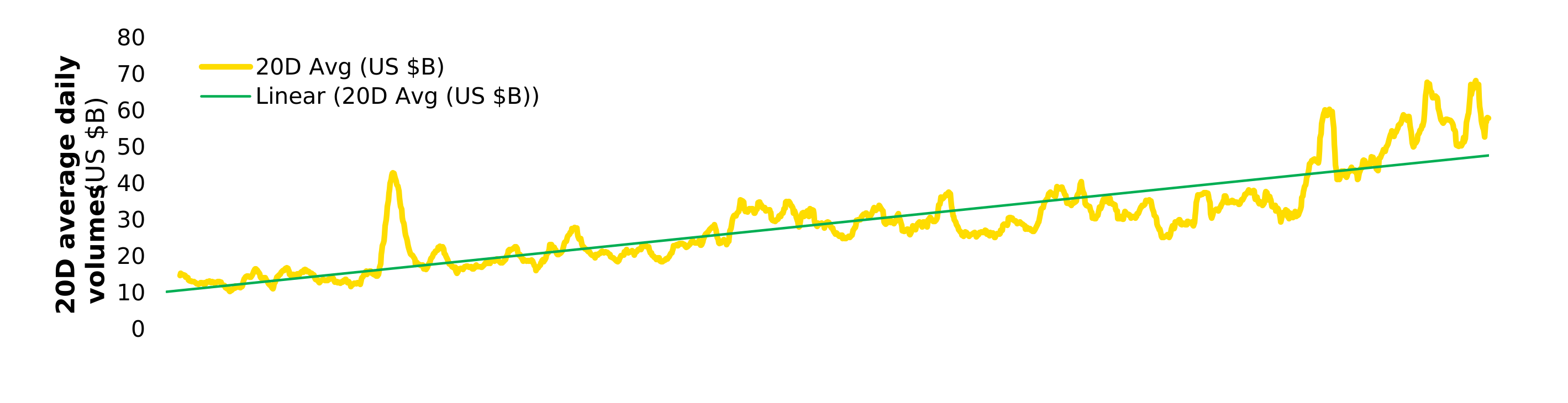
Did you know? Bond ETFs trade an average of $60B a day, up from $20B in 2020. (Figure 3)

Figure 3: Global bond ETF industry trading volumes

Rolling 20D average daily volumes, USD $B

Source: BlackRock, Bloomberg, big xyt as at March 31, 2026. Rolling 20‑day average daily volume is the average number of shares traded per day over the 20 trading days ending on the date referenced. Past performance does not guarantee future results. There can be no assurance that an active trading market for shares of an ETF will develop or be maintained.

Chart description: Line chart showing the growth of global bond ETF trading volume from 2019 to March 31, 2026.


How can bond ETFs support digital asset exposures?

The total crypto market cap is now $2.4T6 and digital assets have become a larger part of investor portfolios:

  • ETPs providing access to cryptocurrency have grown from $4 billion to $120 billion in just 3 years, with now 300+ listed ETPs.7
  • >75% of institutional investors are expected to increase allocations while 59% planned to allocate >5% of AUM to cryptocurrencies.8

Allocations to cryptocurrencies may introduce more volatility in portfolios, which bond ETFs may help offset.

High quality fixed income can help serve as an anchor in portfolios by providing potential income, diversification, and stability. Bond ETFs can help mitigate drawdown and tail risk, which is the risk of extreme or unexpected market losses, by ensuring diversified duration/credit exposure and consolidating exposure into a single vehicle to simplify implementation, and the ability to efficiently rebalance.

A durable foundation: How bond ETFs are powering a portfolio revolution

Today’s portfolios look very different than they did a decade ago. Investors now have access to a broader range of opportunities— from digital assets and thematic strategies to private markets. While this expanded toolkit offers new ways to seek growth and income, it also may introduce greater complexity, different liquidity profiles, and new sources of volatility.

We believe innovation in investing will continue. New asset classes, strategies, and technologies may reshape portfolios in the years ahead. But as portfolios evolve, the importance of a durable foundation only grows.

Fixed income has moved beyond its traditional role as a ballast to equity allocations. And bond ETFs have become a central way investors access, manage, and rely on bonds in a modern portfolio.

In the modern allocation framework, fixed income ETFs are not simply a component of the portfolio — we believe they will continue to evolve to support the revolution to come for portfolios and the assets within them.