

Explore iShares bonds ETFs

Why invest in iShares bond ETFs?

Just as equity ETFs give investors access to baskets of stocks, bond ETFs do the same with the bond market, while offering similar benefits:

Decorative Graphic

Competitive performance

iShares bond ETFs have outperformed the majority of their peers over the last year.1

Decorative Graphic

Low cost

On average, iShares bond ETFs cost 77% less than active mutual funds helping you keep more of what you earn.2

Decorative Graphic

Easy to use

Bond ETFs simplify access to the bond market by making investing as easy as buying a stock.

Decorative Graphic

FIXED INCOME ETF COLLECTION

Simplify fixed income investing

Capture broad exposure to fixed income assets for a balanced portfolio with the simplicity of an ETF.

Pursue your goals with bond ETFs

iShares bond ETFs are designed with your goals in mind. Select from the options below to see which ETFs could be the best fit: ​

How can bond ETFs help you generate income?

If you're looking to earn income from your investments, you may want to consider bonds. Bonds are debt instruments that seek to make regular interest payments in the form of coupons. Bond yields have moved higher in the last five years, creating an attractive opportunity to generate income.​

So-called “Core” bond sectors – which include US Treasuries, mortgage-backed securities and corporate bonds – are considered high quality investments and carry credit ratings between BBB and AAA. Investors can find additional opportunities to generate income in sectors that may offer higher yields, such as high yield bonds and emerging markets.

Ready to invest in bonds? iShares Bond ETFs are a low-cost way to access the bond market. (Learn more about types of bonds)
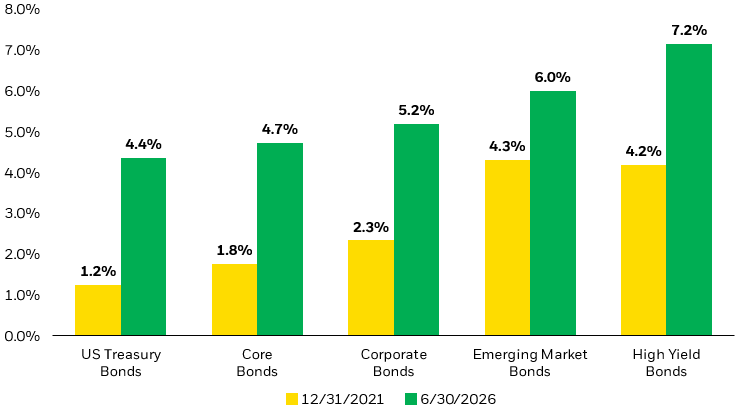
Yields are up

Bar chart showing the increase in yields for major fixed-income indexes.

Source: BlackRock and Bloomberg, as of 6/30/2026. All yields shown are yields to worst. U.S. treasury bonds represented by the ICE US Treasury Core Bond Index, Core bonds represented by the Bloomberg US Aggregate Bond Index, Corporate bonds represented by the Markit iBoxx USD Liquid Investment Grade Index, Emerging market bonds represented by the J.P. Morgan EMBI Global Core Index, and High yield bonds represented by the Markit iBoxx USD Liquid High Yield Index.


Index performance is for illustrative purposes only. Index performance does not reflect any management fees, transaction costs or expenses. Indexes are unmanaged and one cannot invest directly in an index. Past performance does not guarantee future results.

Chart description: Bar chart showing the increase in yields for major fixed-income indexes from 12/31/2021 through 6/30/2026.


Featured funds

Put your cash to work

Short-term bonds may offer stability and income and can be used alongside traditional cash vehicles like savings accounts or money market funds. For example, SGOV, the iShares 0-3 Month Treasury ETF, invests in short-term U.S. Treasuries, which historically have carried minimal interest rate and credit risk. Learn more about SGOV here.

Another way to put cash to work is with floating rate bonds, which have interest payments that move up or down with market rates. In a rising interest rate environment, floating rate bonds can protect portfolios and earn additional income.

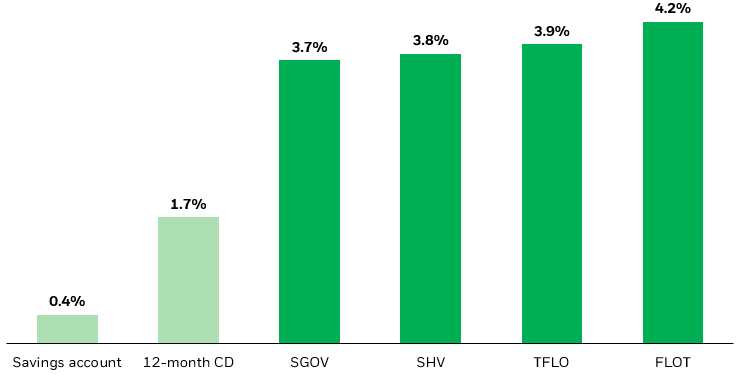
Income opportunities with bond ETFs

(Yield %)

Bar chart showing a comparison of yields currently available on various short-term products.

Source: BlackRock, FDIC, iMoneyNet, as of 6/30/2026. Bond ETF yields are yield to maturity. This information must be preceded or accompanied by a prospectus for the iShares funds.

Performance data represents past performance and does not guarantee future results. Investment return and principal value will fluctuate with market conditions and may be lower or higher when you sell your shares. Current performance may differ from the performance shown. For a prospectus, standardized performance and most recent month end performance, click on the fund’s ticker symbol; SGOV, SHV, TFLO, FLOT.

"Savings Account" and "12 Month Bank CD" are the average APY rate of all FDIC-insured savings and 12-month bank CDs. iShares and BlackRock ETF yields represent the 30-Day SEC Yield. It’s important to note that there are material differences between Savings accounts, CDs and ETFs, including investment objectives, risks, fees, and expenses. CDs are fixed income investments that generally pay a set rate of interest over a fixed time period until maturity, whereupon the original principal is typically returned plus any interest earned. Early withdrawal from CDs may result in early withdrawal fees. Most savings accounts pay compound interest, meaning earnings are added to the balance to create a larger base on which future interest is paid. Most savings accounts allow you to add or withdraw money at any time without incurring a fee. Both Savings accounts and CDs principal investments are insured by the FDIC up to applicable FDIC limits, while ETFs are not FDIC insured and may lose value. Most ETFs seek to track an index, before fees and expenses. ETFs trade on exchanges intraday at market price, which may be greater or less than net asset value. Transactions in shares of ETFs may result in brokerage commissions and may generate tax consequences. There can be no assurance that an active trading market for shares of an ETF will develop or be maintained. Short duration bond ETFs typically carry a higher degree of risk than the other cash alternatives and should not always be used as a substitute.


Chart description: Bar chart showing a comparison of yields currently available on various short-term products.


Ways to invest excess cash

There’s no one-size fits all solution. For many, it helps to think of your cash in layers, and segment it based on how soon you will need to use it. Try segmenting your cash into short, medium and longer-term needs.​

For instance, a segment can be cash that you need as soon as 0-3 months, 3-6 months, in the next 6-18 months, or 18 months and beyond. As a general rule, the sooner you will need to use each segment of your cash, the less risk you may want to take on with an investment.​

Cash that will go unused immediately may be able to earn more interest for you now. The table below outlines a hypothetical cash segmentation framework.​

Using a short-term investment strategy to park your cash is a goal that many investors may seek to pursue through iShares ETFs.

Featured funds

Diversify with bonds

Bonds can provide diversification — an important benefit in volatile markets.

Bonds typically don’t have the same drivers of return as equities, which can help reduce overall risk in a portfolio. This means, when equity markets are falling short of expectations, or just falling, your entire investment portfolio may not have to go with it.

iShares core bond ETFs are low-cost single-trade solutions to gain exposure across a wide-ranging set of bond market sectors.

Featured funds

Position your portfolio against inflation with bond ETFs

Inflation — the overall increase in the cost of goods and services — can impact your pocketbook and also your investment portfolio.

For example, if a portfolio returns 5% but inflation is 3%, the "real return" (return after accounting for inflation) is only 2%.​3

Treasury Inflation Protection Securities (TIPS) are government bonds whose principal values adjust based on the rate of inflation, helping investors preserve their purchasing power. Investors can seek inflation protection for their portfolios with iShares TIPS or Inflation Hedged Bond ETFs.

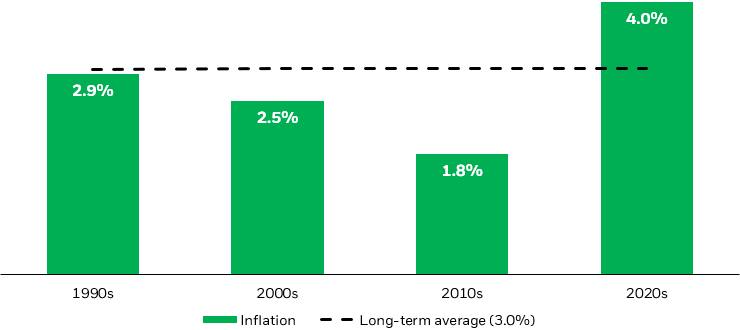
Inflation over time

Bar chart showing average U.S. inflation rates since the 1990s vs. the long-term average.

Source: Bureau of Labor Statistics, as of 6/30/2026.

Chart description: Bar chart showing average U.S. inflation rates since the 1990s vs. the long-term average of 3.03%.


Featured funds

Invest in international bonds

International bonds represent a large part of the global bond market, but some investors may be concentrated in U.S. bonds.

iShares International Bond ETFs can make it easier to gain exposure to international government and corporate bonds, helping investors broaden their opportunity set and diversify beyond U.S. interest rate risk.

For investors who want global bond exposure without taking on foreign currency fluctuations, many bond ETFs offer U.S. dollar-hedged options.

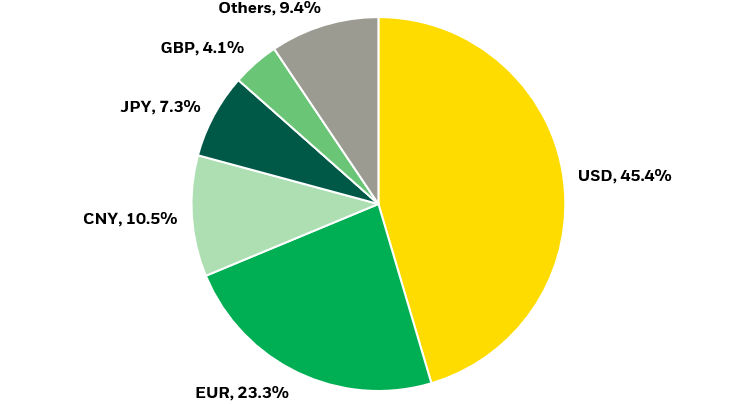
Global bond market by currency

Pie chart showing the exposure to different currencies within the Bloomberg Global Aggregate Bond Index.

Source: Bloomberg, BlackRock, as of 6/30/2026. GBP stands for Great Britain Pound, the currency of the United Kingdom. JPY is the Japanese yen; CNY is shorthand for China's renminbi; EUR represents the euro, the official currency of the European Union. 

Chart description: Pie chart showing the exposure to different currencies within the Bloomberg Global Aggregate Bond Index.


Featured funds

Bond Laddering 101

A bond ladder is an investment strategy that involves buying a series of bonds that mature in consecutive calendar years. For example, a five-year bond ladder invests in five bonds with maturities in five consecutive calendar years.

When one bond matures, the investor can use the proceeds to invest in a longer maturity bond, known as the next rung of the bond ladder, or use the proceeds for another goal.

Investors build bond ladders seeking to:

  • Generate predictable cash flows: Scheduled maturities can provide regular principal payments
  • Stay fully invested in the bond market across interest rate cycles
  • Manage future expenses such as buying a house, paying tuition, or property tax bill

A bond ladder can be built using individual bonds or term-maturity ETFs such as iShares iBonds ETFs. iBonds ETFs can help investors build a ladder and iBonds Ladder ETFs allow investors to buy a professional managed bond ladder.