In Market Wrap, we look back at the events of the past month and outline what's on our radar for the month ahead.
Market wrap: September 2026

Key takeaways
01.
Why are investors looking at government bonds now?
Bond prices have been volatile recently, as investors have weighed up data about inflation and its impact on future interest rates, as well as an increased supply of bonds from companies seeking to raise money to fund AI spending. As a result, government bonds across major developed markets once again offer meaningful income opportunities.
02.
What’s driving stock markets?
The technology and energy sectors have been in focus among investors recently, supported by strong company profits and improving profit outlooks.
03.
Events on our radar
Investors are likely to remain focused on central bank decisions, inflation and geopolitical developments.
Capital at risk. The value of investments and the income from them can fall as well as rise and are not guaranteed. Investors may not get back the amount originally invested.
Why are bonds in focus?
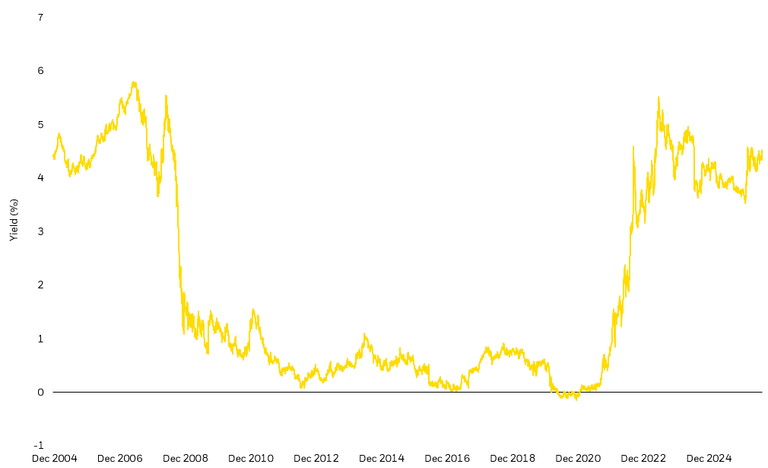
Recent increases have pushed bond yields in several markets – including Europe, the US and Japan – to fresh multi-year highs. Two key forces have driven this: persistent inflation and competition for ‘capital’ (money).
Firstly, persistent inflation has led central banks to keep interest rates high, to try to keep spending and investment levels contained and therefore reduce pressure on prices. When investors expect interest rates to stay high, they also tend to demand higher yields from existing government bonds, which means their prices fall.
Secondly, greater competition for investors’ money, as governments and companies look to borrow more, can also push yields higher, because different borrowers are competing for that money and need to offer higher interest payments to secure it. Concerns around public finances – particularly in the US, France and the UK – can add to this, as investors may ask for a higher return when a borrower’s finances look more stretched.
The result is that – in a change from much of the past decade, when government bond yields across developed markets have been relatively low – bonds can once again offer meaningful income, at around 4% in some major markets.¹ However, bond prices can still fluctuate as interest rate expectations change, which can mean periods of volatility, as investors have experienced recently.
What does ‘yield’ actually mean? A bond’s yield is the return available to an investor based on the interest it pays and the price of the bond. When an investor buys a bond, they’re essentially lending money to an issuer, such as a government or a company. In return, the issuer pays regular interest and repays the original amount borrowed at the end of the bond’s term. While the interest payment is usually fixed, the bond’s price can rise or fall depending on market conditions. So, a bond’s yield and its price move in opposite directions: when a bond’s price falls, its yield rises because the investor is paying less to receive the same interest payments, and vice versa.
2-year US Treasury yield, 2004 - 2026
Source: Bloomberg, as of 4 September 2026.
What’s driving stock markets?
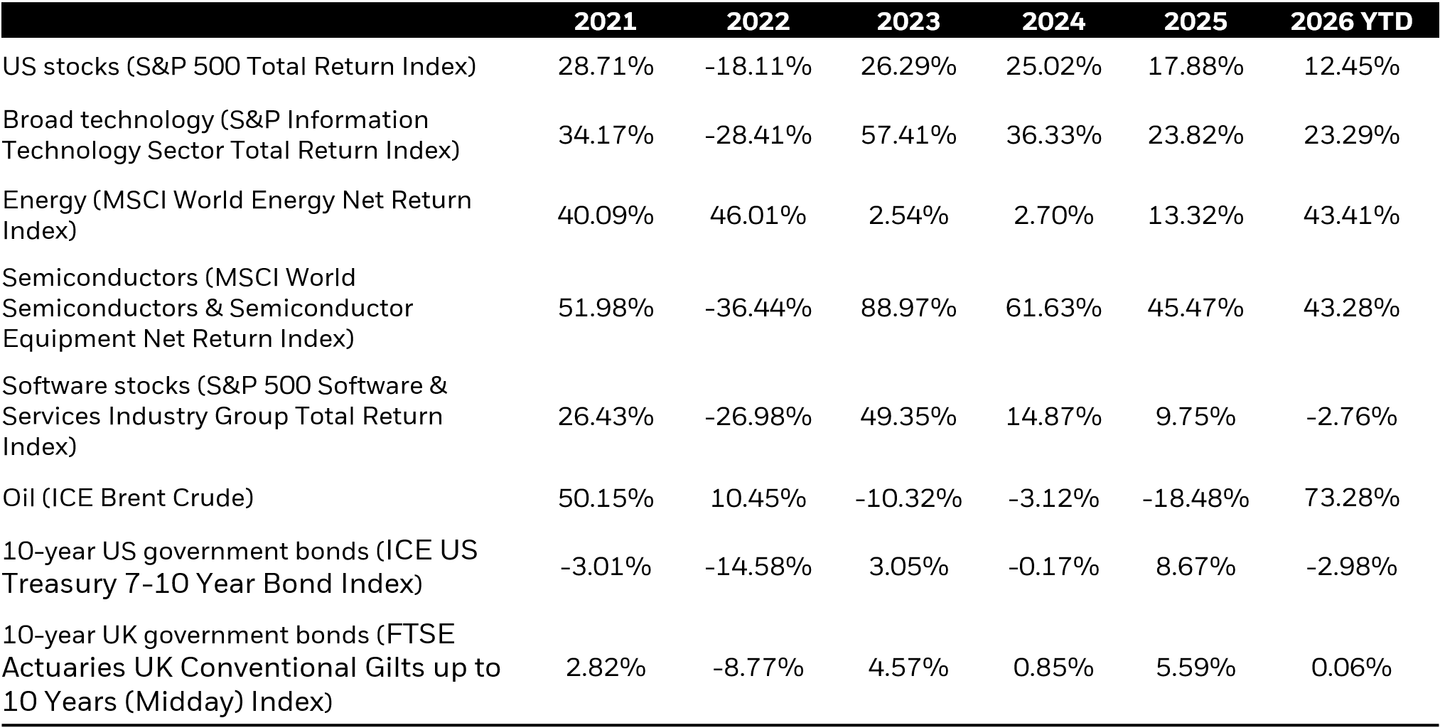
The latest ‘earnings season’ – when companies report their profits and outlooks – delivered solid results across major regions, with energy and technology among the strongest global sectors for revenue and profit growth.²
Technology was supported by a stronger profit outlook for semiconductor companies and a recovery in software after a period of weakness, linked partly to concerns over AI disruption.
Energy, meanwhile, benefited from higher oil prices, supported by tighter supply conditions and broader geopolitical uncertainty.
Events on our radar
Looking ahead, investors will be watching the next round of central bank meetings closely, after several major developed market central banks – including the European Central Bank and the Bank of Japan – have raised interest rates this year. Investors will also be monitoring developments in the Middle East, particularly for any impact on energy prices, inflation and the broader economic outlook, alongside ongoing US-China trade discussions.
Performance of financial markets, 2021-2026 YTD
The figures shown relate to past performance. Past performance is not a reliable indicator of current or future results. Index performance returns do not reflect any management fees, transaction costs or expenses. Indices are unmanaged and one cannot invest directly in an index. Source: Bloomberg, as of 31 August 2026.